
At a glance
- Most public litter bins are retired because of surface corrosion, worn openings or vandal damage — not because the structure collapses.
- Powder-coated galvanized steel typically delivers 8–12 years of service in normal urban conditions.
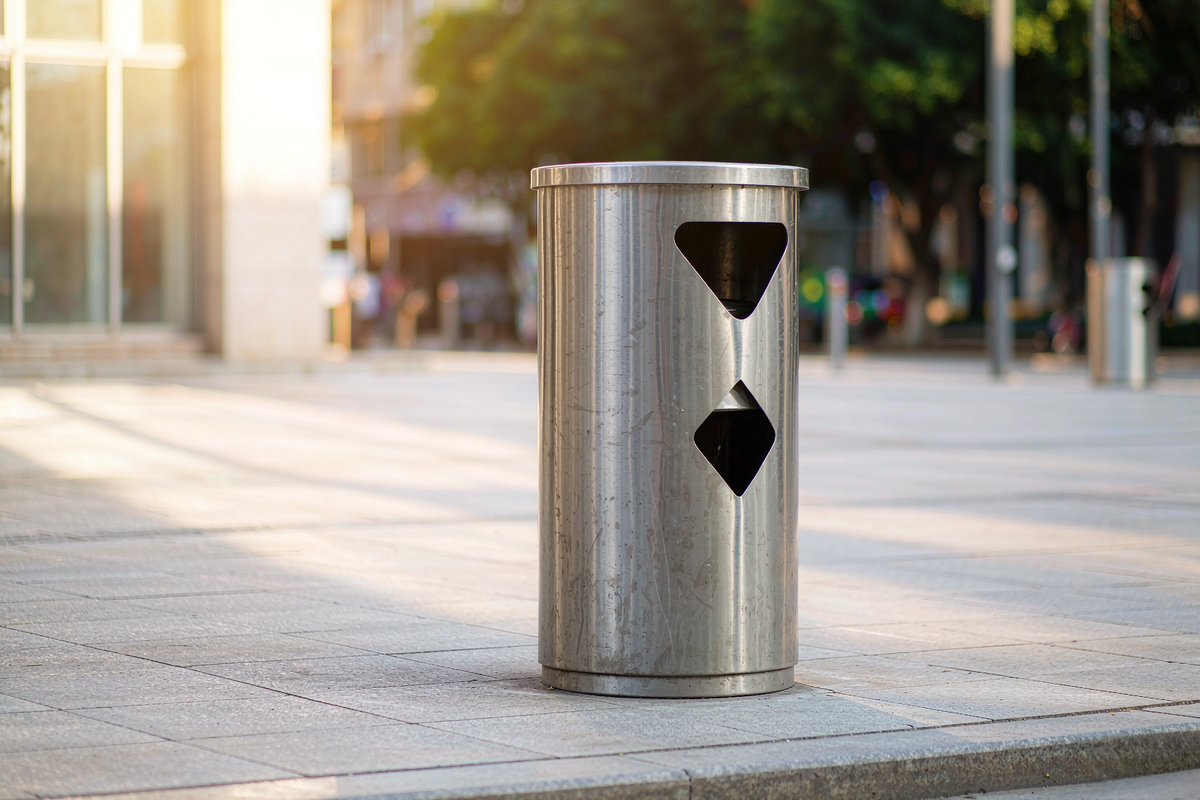
- 304 stainless steel is the long-service option, often 15 years or more, and suits coastal and high-profile sites.
- Liner replacement, hinge care and prompt touch-up of coating scratches can add several years to any bin’s life.
What actually determines how long an outdoor litter bin lasts?
Four factors do most of the work: the base material, the protective coating, the environment, and how the bin is used and maintained. A bin made from thin single-skin steel with a basic paint finish in a seaside plaza will age several times faster than a galvanized-and-powder-coated bin on a sheltered campus path, even if they look identical on day one.
Environment is the multiplier. Salt air and de-icing salts attack coatings and every scratch edge; strong UV fades and embrittles plastics; tree sap, litter acids and standing water all leave their mark. Usage intensity matters too — a bin beside a transit entrance is emptied, hosed down and bumped by trolleys far more often than one in a quiet park corner.
Finally, the details decide where failure starts. Non-stainless screws rust first, flat sealed bases trap water, and sharp openings wear visibly within a couple of heavy seasons. When we build outdoor litter bins, these details — not just the steel grade — are where service life is won or lost.
How long do different bin materials last outdoors?
No single number fits every site, but there are typical ranges for public-space bins in temperate urban conditions. Treat them as planning values for budgeting replacement cycles, not guarantees:
| Material | Typical outdoor service life | What usually ends its life |
|---|---|---|
| Powder-coated galvanized steel | 8–12 years | Coating damage and rust creeping from scratches or cut edges |
| 304 stainless steel | 15+ years | Surface scratching and dulling rather than structural failure |
| HDPE / wood-plastic panels | 5–8 years | UV fading, embrittlement and impact damage on panels |
| Timber-clad steel frame | 6–10 years with slat renewal | Weathered, splintered slats; the steel frame usually outlasts the wood |
Two readings of this table are worth noting. First, stainless steel is rarely retired because it fails — it is retired because a client wants a newer look, which is a budget decision, not a durability one. Second, composite materials age from the outside in: the colour goes first, then the surface, long before load-bearing strength is an issue.
How can specification choices extend a bin’s service life?
Specify from the inside out. Hot-dip galvanizing under the powder coating gives steel a second line of defence, so a stone chip does not become a rust patch within one winter. Choose 304 (not 201) stainless for coastal or de-iced sites, and insist on stainless fixings — screws and hinges are almost always the first visible failure point on a budget bin.
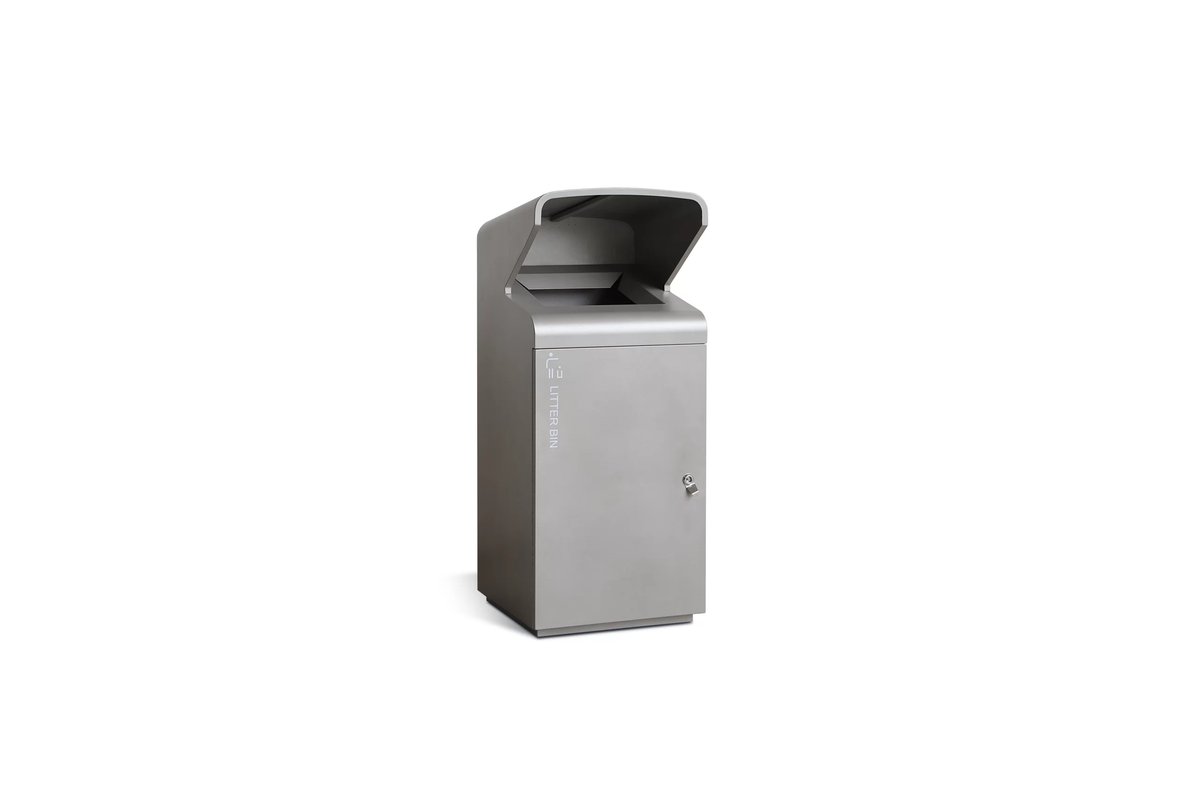
Design for repairability. A removable inner liner keeps wet waste off the decorative shell, drainage holes at the base stop water pooling inside the skirt, and replaceable side panels or timber slats mean one damaged face does not retire the whole unit. Pairing bins with ash columns at entrances also keeps cigarette embers out of the main bin, which protects liners and reduces fire scorching.
Maintenance closes the loop: a periodic wash with neutral detergent, hinge lubrication, and prompt touch-up of scratches. Our rust prevention guide covers the washing and touch-up routine in detail.
When should a litter bin be repaired, and when replaced?
Repair while the damage is cosmetic: liners, lids, hinges, locks and slats are all standard wear parts that cost a fraction of the bin. Replace when corrosion has reached the structural shell, when panels delaminate or crack through, or when repairs would exceed roughly a third of a new unit’s cost.
A practical approach for municipalities is to plan a mid-life refurbishment at around year five to seven — new liners, re-coated or re-oiled surfaces, new fixings — and budget full replacement at the end of the material’s range. If you are also deciding how many units a site needs before specifying them, see our bin count calculation method, and for sorting configurations the waste-sorting station layout guide.
Frequently asked questions
- How long do outdoor litter bins last?
- In normal urban conditions, a powder-coated galvanized steel litter bin typically serves 8–12 years, 304 stainless steel models often serve 15 years or more, and HDPE or wood-plastic bins usually last 5–8 years. Coastal air, heavy use and poor maintenance shorten these ranges, while timely liner replacement and touch-up painting extend them.
- Which bin material lasts the longest outdoors?
- 304 stainless steel generally lasts the longest outdoors because it resists corrosion through the full panel thickness rather than relying only on a coating. Its usual end of life is cosmetic — surface scratching and dulling — rather than structural failure, which is why it is preferred for coastal sites and high-profile locations.
- How do I make my outdoor litter bin last longer?
- Choose galvanized steel under the powder coating, use stainless fixings, fit a removable inner liner, ensure drainage at the base, wash the bin periodically, and touch up coating scratches promptly. Specifying replaceable panels or slats also lets you renew the worn parts instead of the whole bin.
Need this specified for your own site? Send us the scene, quantity and finish requirements.
Get a quote