
At a glance
- Match the liner to the bin's internal shape — square, rectangular or round — not to a nominal litre figure alone.
- Measure internal width + depth + slack for the liner width; add internal height plus rim allowance for the liner height.
- Outdoor waste is heavier and sharper than office waste, so a heavier gauge pays for itself in fewer split bags.
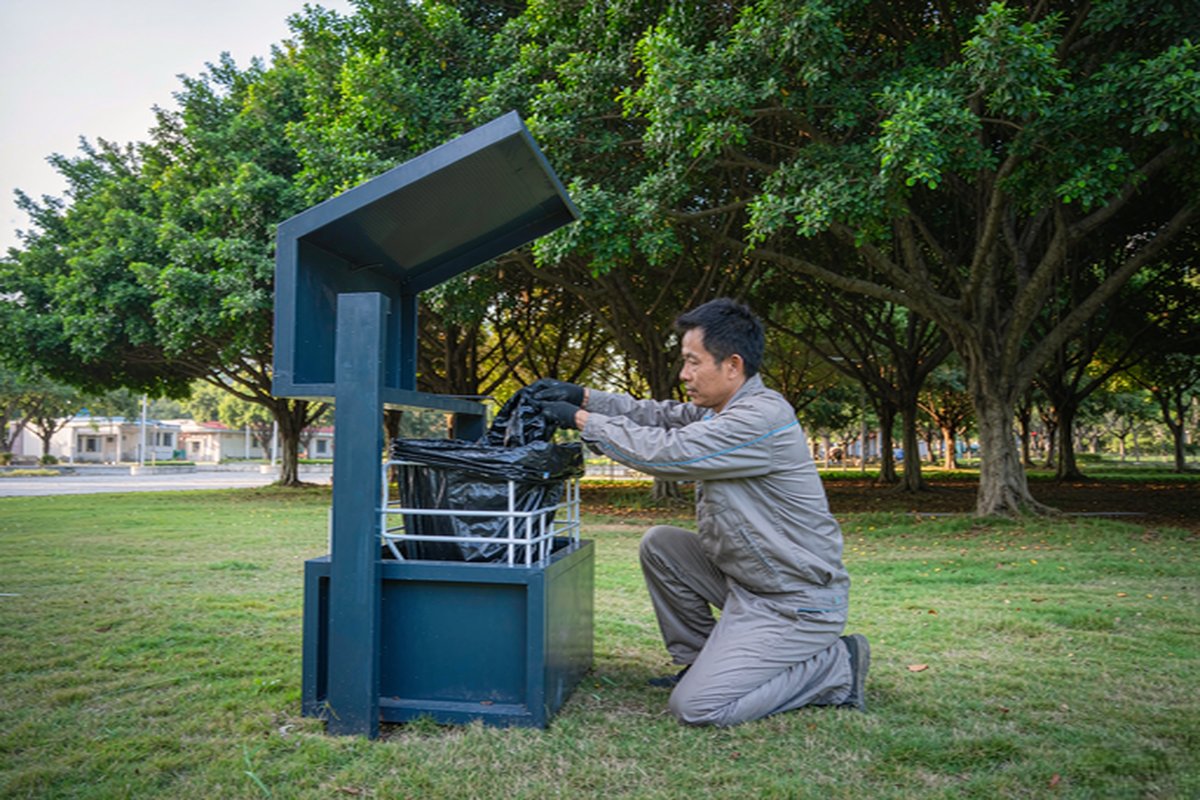
- A bin with an internal liner frame or retaining ring keeps the bag visible, seated and quick to change.
Why does liner fit matter so much outdoors?
Indoors, a badly fitted liner is a nuisance. Outdoors it is a maintenance problem. Park and street waste arrives wet, compacted and irregular — bottles, food packaging, grass clippings, the occasional branch. A liner that is too small stretches against the shell and splits under that load; a liner that is too large folds into the waste stream and hides the fill line, so crews either overfill (and spill on lifting) or replace half-empty bags.
There is a public-facing cost too. When a liner slips down inside the bin, the first user who drops a cup in sees an apparently full bin and starts balancing rubbish on the hood. From there the site degrades quickly — a pattern that turns up in almost every review of how many litter bins a park actually needs, where service quality matters as much as bin count.
What size liner does your bin actually need?
The reliable method is to measure the bin's internal dimensions with a tape, then add working allowance:
- Liner width = internal width + internal depth + about 10–20 cm of slack. The slack lets the liner seat into the corners instead of stretching drum-tight.
- Liner height = internal height + half the bin's height, roughly. The extra material folds over the rim and tucks underneath, which is what holds the liner in place.
- Shape must match the shell. A round bag in a square bin leaves loose corners that catch waste; a square bag in a round bin bunches and splits at the folds.
If the bin has a hood or chute, remember the liner must clear the opening — our earlier guide to choosing the right litter bin opening size explains why the aperture and the liner work together. When you order a bin, ask the manufacturer for the recommended liner specification in writing; for our own outdoor litter bins we publish the internal dimensions of every model so facilities teams can source liners locally.
Which liner material and gauge suit public sites?
Most outdoor service now runs on polyethylene liners in three practical families:
| Liner type | Best suited to | Watch out for |
|---|---|---|
| Standard gauge LDPE | Office-adjacent bins, covered bins, light footfall | Splits on sharp or compacted waste |
| Heavy gauge LDPE | Parks, streets, transport stops — the default for public bins | Costs more per bag; offsets it in avoided cleanups |
| Cored / gusseted liners | Fixed-format bins where the shell shape never changes | Usually needs a standing supply agreement |
Colour-coding is worth deciding at the same time as gauge. Where bins separate recyclables from residual waste — the layouts we describe in waste sorting station layouts — matching liner colour to stream keeps crews honest at the point of collection and prevents a well-designed sorting station from silently merging streams in the back of the vehicle.
How do you keep liners seated and easy to change?
The best liner specification fails if the bin itself fights the liner. Three hardware details do most of the work:
- An internal liner frame or retaining ring grips the folded-over edge of the bag so it cannot slide down as waste settles.
- A hinged shell or removable front panel lets the crew lift a full liner straight out instead of fishing it through the top opening.
- A smooth internal shell — powder-coated steel or stainless — stops wet waste from wedging in seams. Stainless shells are the easiest to keep hygienic; our note on cleaning stainless outdoor bins covers the routine.
For small bins in shelters or lobbies, the same logic applies at a different scale — see the indoor models on our indoor trash bin line, which take standard bag sizes so facilities teams are not locked into a proprietary liner.
How should liners fit into the daily service routine?
Once the specification is right, the routine is short: lift the liner out by its tucked rim, check the shell for trapped liquid, drop in a fresh bag and tuck the rim over the frame. Crews carry spare liners of the single agreed specification rather than a mixture, which removes the "make it fit" improvisation that causes most splits. For route planning, the liner specification also sets the practical weight limit per bag — a consideration we touch on in the guide to bin cleaning and hygiene and in planning bin counts for parks.
If you are specifying a new fleet of bins and want the liner sizes confirmed before purchase, send us the bin models or the site plan — we will return the recommended liner specification for each unit. You can also browse our projects to see the bin families in place, or read the case studies index for more maintenance guides.
Frequently asked questions
- What size bin liner do I need for an outdoor litter bin?
- Measure the bin's internal width, depth and height, then add the internal width plus depth together and add roughly 10-20 cm of slack, and add the liner height plus around half the bin's height so the liner can be tucked over the rim. A liner that follows the bin's shape - square, round or rectangular - stays in place far better than a general-purpose bag.
- Do heavier gauge bin liners really matter for public bins?
- Yes. Outdoor waste is heavier and sharper than office waste - bottles, branches, glass shards - and a thin liner that splits inside the bin leaves the crew scraping the shell at every service. A heavier gauge costs slightly more per bag and repays it in avoided cleanup time and fewer emergency refits.
- How do I stop bin liners from slipping down inside the bin?
- Choose a liner sized for the bin so the top can be folded or tied over the rim, and prefer bins with an internal liner frame or retaining ring that grips the bag's edge. Stretch the liner to seat the base flat, and leave a little slack rather than filling the bin rigid, which pulls the liner down as waste settles.
Need bins specified with matching liner sizes for your sites? Send us the list.
Get a quote