
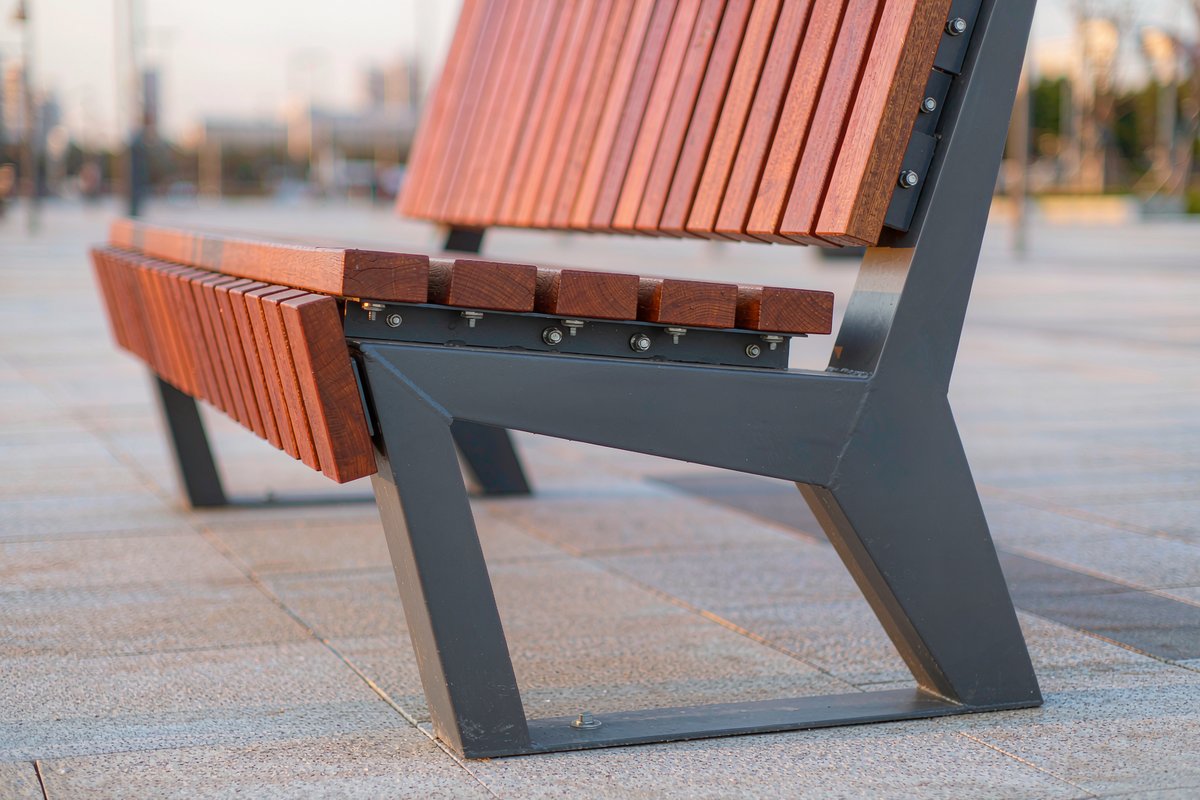
At a glance
- Dense tropical hardwood slats give the warmest feel and can be sanded and re-oiled instead of replaced.
- HDPE composite slats need no oiling and resist rot and insects, but dark colours hold heat and scratch pale.
- Aluminium slats shrug off rain, salt and graffiti and pair naturally with steel or cast aluminium frames.
- Whichever material you pick, insist on bolted, replaceable slats so damage means a small repair, not a scrapped bench.
Which bench slat material lasts longest outdoors?
Service life is decided less by the material name and more by the match between material, climate and maintenance. A dense tropical hardwood such as merbau, washed and re-oiled on a sensible cycle, can serve a park bench for many years and keeps looking "wood" while it does it. Left unmaintained in a humid climate, the same slat greys, checks and eventually rots from the fixing holes — the material did not fail, the upkeep did. If you are weighing hardwood for a humid site, it is worth reading our routine for maintaining Merbau bench slats in humid climates before deciding.
HDPE composite slats are immune to rot and insect attack, which removes the two failure modes that end a wooden slat's life. What they face instead is surface wear: UV gradually fades the pigment, grit dragged across the seat leaves pale scratch marks, and heavy graffiti needs care to remove without damaging the texture. Structurally, a composite slat typically outlives its look unless the site accepts a weathered appearance. Aluminium slats are the most forgiving structurally — they do not rot, swell or shatter — and their main enemies are coating chips at fixing points and denting from impact rather than the material itself degrading.
How much maintenance does each slat material need?
Hardwood asks for the most, and gives the most back. The routine is a wash-down with water and mild detergent, an inspection of fixings, a light sand of any raised grain or splinters, and a re-oil every 12 to 24 months depending on sun and rain exposure. None of these steps is skilled work, but they must be budgeted: a bench programme that promises oiling and never does it will look worse than a composite bench that is simply hosed down.
Composite slats need washing and little else. Plan for a periodic check that the slat fixings remain tight (thermal movement works fixings loose over the years) and accept that deep scratches are visible on dark colours. Aluminium slats also need only washing; add a quick look at the powder coating around bolt holes during the same rounds you already run for steel furniture, and touch up chips before moisture gets underneath.
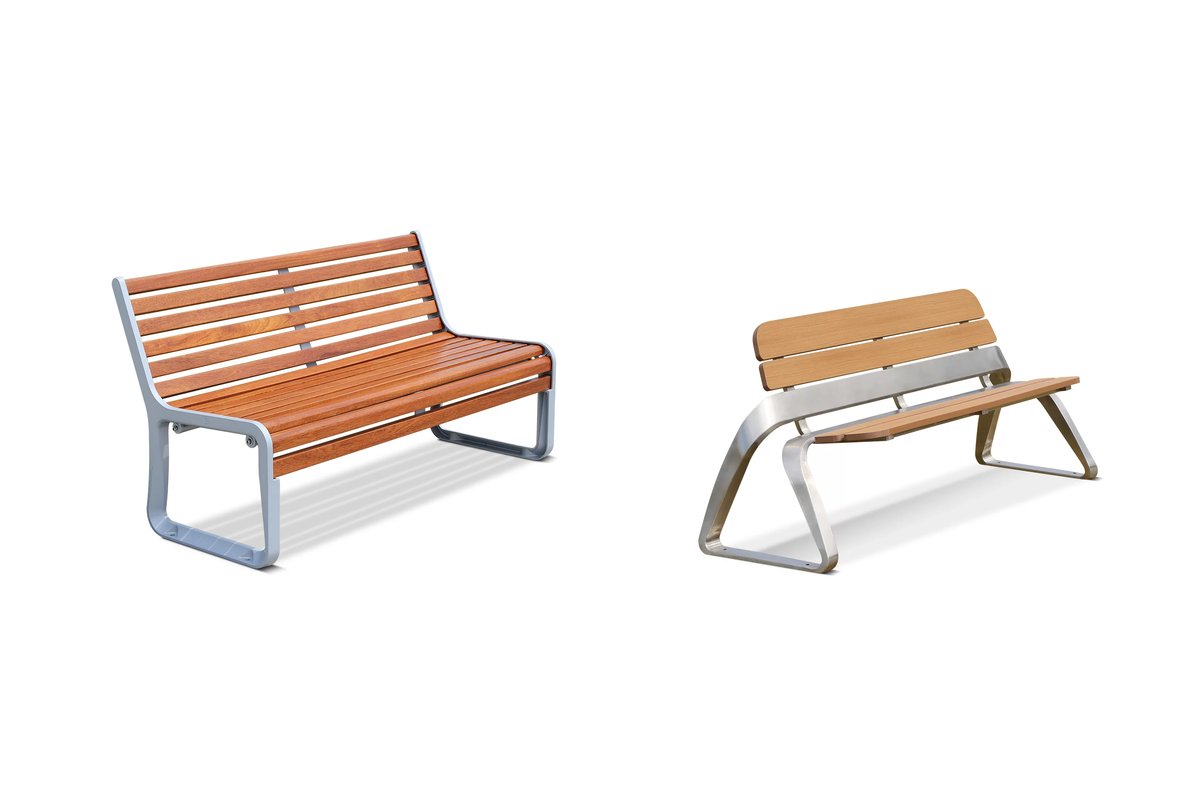
Wood vs composite vs aluminium: the side-by-side comparison
The table below compresses the decision into the four aspects buyers actually argue about.
| Aspect | Hardwood slats | HDPE composite / aluminium |
|---|---|---|
| Feel in use | Warm and natural; can splinter if neglected | Composite: even, slightly plastic touch. Aluminium: cool on winter mornings, hot in direct sun |
| Routine maintenance | Wash, inspect, re-oil every 1–2 years | Wash only; check fixings periodically |
| Main wear mode | Greying, checking, rot at fixings if unmaintained | Composite: fading and pale scratches. Aluminium: coating chips and dents |
| Best fit | Parks, heritage and prestige sites with maintenance staff | Composite: schools and high-traffic plazas. Aluminium: coastal and waterfront sites |
Which slat material feels better in hot sun and cold mornings?
Thermal comfort is the spec line nobody writes down and every sit-down test reveals. Metal slats track air temperature quickly: pleasant in the evening, biting on a frosty morning, uncomfortable under midday summer sun. Dark composite slats absorb and hold heat, which is why waterfront benches in full sun often specify lighter composite colours or hardwood. Wood moderates all of this — it warms slowly, cools slowly and rarely feels extreme — which is a real reason it keeps winning municipal seating trials even when composite is cheaper on paper.
If the bench position is fixed and shaded only part of the day, you can also design around the problem: orient the seat away from afternoon sun, place planters or trees as a shade layer, or choose a slat colour that stays touchable in summer.
How do slats, frames and fixings work together?
The slat is the wearing part; the frame is the long-term investment. Pair hardwood or composite slats with a hot-dip galvanized, powder-coated steel or cast aluminium frame and the structure will outlive several sets of slats. Specify bolted fixings — ideally security or anti-tamper bits — so individual slats can be swapped in minutes with standard tools. Keep the slat profile standard across a whole furniture programme and one spare-part crate covers every bench in the district; for the frame side of that logic, see our guide to preventing rust on outdoor steel furniture.
When you shortlist models, check that the manufacturer offers replacement slats as a listed spare, not a custom order. Our park benches and seating range is built around replaceable slat profiles for exactly this reason — and if you need help matching a slat material to a specific site, send us the scene and usage and we will suggest two or three options with the trade-offs spelled out.
Frequently asked questions
- What is the best material for outdoor bench slats?
- There is no single best slat material - it depends on the site. Dense tropical hardwood gives the warmest feel and can be sanded and re-oiled; HDPE composite needs the least routine maintenance; aluminium resists moisture, salt and vandalism best. Match the material to climate, footfall and the maintenance budget you can actually commit.
- Do composite bench slats get hot in the sun?
- Yes - dark HDPE composite slats absorb heat and can become uncomfortable in direct summer sun, more so than wood. Lighter composite colours, shaded positions or slat designs with air gaps reduce the problem. Aluminium behaves the opposite way: it can feel cold on winter mornings and hot under midday sun.
- Can you replace wooden bench slats with composite slats?
- Usually yes, as long as the composite section matches the frame's slat channel and the fixing holes line up. Many steel and cast aluminium bench frames accept both hardwood and composite slats in the same profile. Confirm the slat thickness, the fixing type and the load rating with the frame manufacturer before swapping.
Need bench slats specified for your own site? Send us the scene, quantity and finish requirements.
Get a quote