
At a glance
- Spacing on centres — not the catalogue page — decides how many bicycles a row of racks actually holds.
- One hoop serves two bicycles when riders can load from both sides and the row has standing room.
- Capacity is calculated from peak demand: count the busiest hour, not the quiet afternoon.
- Racks get used when they sit close to the destination, in sight of it, on a lit route — and anchored so they stay put.
Why does rack spacing matter more than rack count?
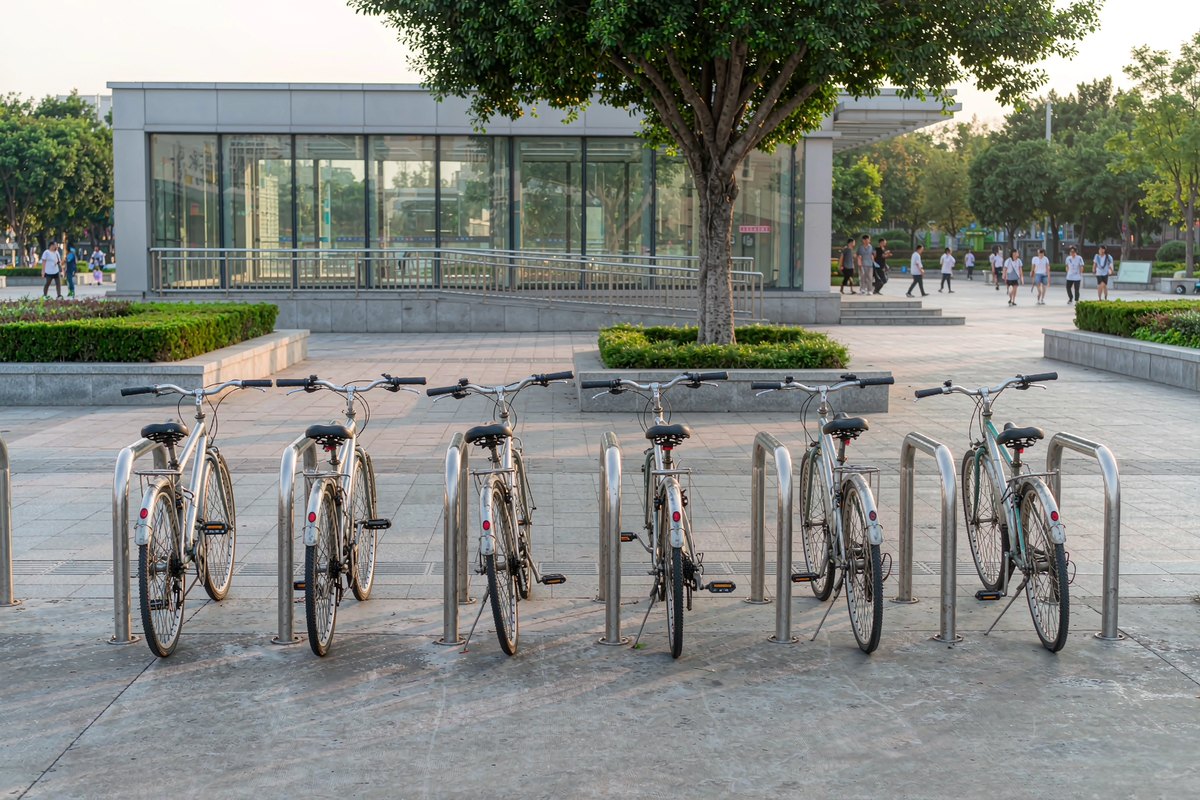
Because a rack row is only as good as the geometry between the hoops. A bicycle is roughly 1.8 metres long and, with handlebars, a little over half a metre wide, and each rider needs standing room to wheel the bike into the rack, lift the front wheel past the hoop and lock the frame. When hoops are set too close, or rows are left with no aisle, riders park diagonally, take two slots each, or leave the rack entirely — which is how a row "with capacity for twenty" ends up holding nine bikes and a fence full of chains.
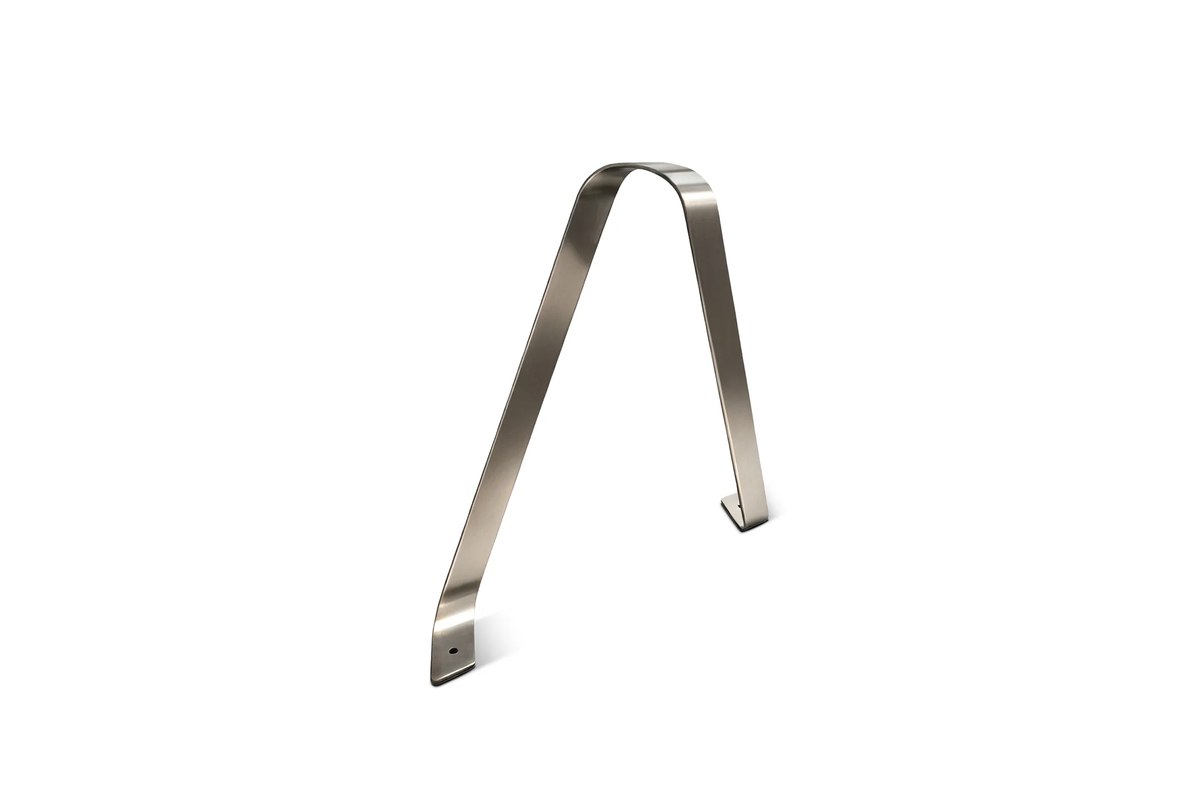
Spacing also decides the cost side. Hoop racks are bought by the module, and the width of the unit you specify is the spacing unit you get. LVEN's stainless steel hoop racks, for example, come in a 60 cm module (Bicycle Racks 1, 80 + 30 cm high), a 60 or 80 cm module (Bicycle Racks 2, 90 + 30 cm high) and a wider 93 cm module (Bicycle Racks 3, 76.2 cm high). Choosing the module and the centre spacing together is what turns a budget line into real parking capacity.
How far apart should hoop racks be set?
Two layouts cover most sites, and each has its own spacing logic:
- Parallel rows. Bikes stand side by side along the row, each hoop serving two bicycles — one loaded from each side. With roughly one metre between hoop centres, every frame gets its own slot and handlebars do not fight; at 60–80 cm centres the row still works when access is good, but packing gets tighter and cargo bikes take more room.
- Perpendicular access. Riders wheel the bike straight into the hoop so the bike sits at right angles to the row. This layout needs more depth but fewer running metres, and the aisle becomes the constraint: keep it wide enough for two riders to pass with bikes — commonly 1.2 m or more — or the deep row will not fill from the back.
- Clearances around the row. Leave room at the ends for the first and last frame to overhang, keep the clear walking width required on the adjoining path, and keep the row within sight of the entrance.
Local planning guidance usually sets minimum dimensions for cycle parking, so treat these figures as practical starting points and confirm the local requirement before ordering.
How do you calculate capacity for a site?
Count demand at the peak, not the average. Stand where riders park today — the informal rail, the row of lamp posts — and count bikes during the busiest hour of the busiest day, then add headroom for growth. The arithmetic from there is simple:
- One hoop equals two bicycle spaces in a parallel layout with room to load from both sides.
- Hoops per run = run length ÷ centre spacing: a 10-metre run at one-metre centres fits about ten hoops, so roughly twenty spaces.
- Perpendicular rows trade width for depth: fewer hoops per running metre, more bikes per square metre — and the aisle pays for it.
Then sanity-check the siting, because capacity that lands where nobody passes is not capacity. The rack options and finishes are in our bicycle rack range.
Where should racks sit so people actually use them?
Cyclists choose parking the way pedestrians choose a bench: by convenience and by how safe the spot feels. In practice:
- Close to the destination entrance — the first metres of walking matter more than another two hoops.
- Within sight of the main route, not tucked behind planters or service yards; passive oversight does more for security than any lock.
- On a lit, level, paved surface with drainage, so riders are not parking in standing water after rain.
- Out of the flow: not blocking doors, ramps or accessible routes, and not pinching the footpath below its clear width. The same clearances that matter for seating and bins are set out in our accessibility design guide and our bin count planning guide.
Fix the racks down, for the same reason benches and bins are anchored: an unanchored rack migrates, and a rack that has drifted two metres down the plaza no longer matches the plan — or the lighting. The fixing logic is the same as our bench anchoring guide, and tamper-resistant hardware is covered in our anti-theft fixings guide.
What should you specify for a rack that lasts outdoors?
Material first: stainless steel hoop racks keep a clean look near entrances and in coastal air, and weld quality matters as much as grade — a rough weld is where corrosion and snagged locks start. Check the details that make installation boring in the right way: base plates with pre-drilled holes sized for the anchor bolts you will use, no sharp edges at wheel height, and a profile that grips a D-lock across frame and wheel, not just a wheel.
If you are planning cycle parking alongside the rest of a furniture package — seating, litter bins and planters usually follow — send us the site plan and we will match rack modules and spacing to the layout. More installation examples are in our projects and the case studies index.
Frequently asked questions
- How far apart should bicycle racks be spaced?
- In a parallel layout, hoop centres of roughly one metre give each bicycle its own slot when one hoop serves two bikes loaded from both sides; 60–80 cm centres can work when access is good but pack tighter. Perpendicular layouts need an aisle wide enough for two riders to pass — commonly 1.2 m or more. Local cycle-parking guidance may set minimums, so confirm it before ordering.
- How many bicycles fit on one hoop rack?
- Two, when the rack is set so riders can load from both sides and the row leaves standing room; one-sided loading against a wall halves that. Larger units with more contact points hold more, but the practical answer comes from the centre spacing and the aisle, not from the hoop alone.
- Where should bicycle racks be placed on a site?
- Close to the destination entrance, within sight of the main route, on a lit and level paved surface, and out of the way of doors, ramps, accessible routes and clear footpath widths. Anchored installation keeps the racks where the plan put them, season after season.
Planning cycle parking alongside benches, bins and planters? Send us the site plan and we'll match the rack modules.
Get a quote