
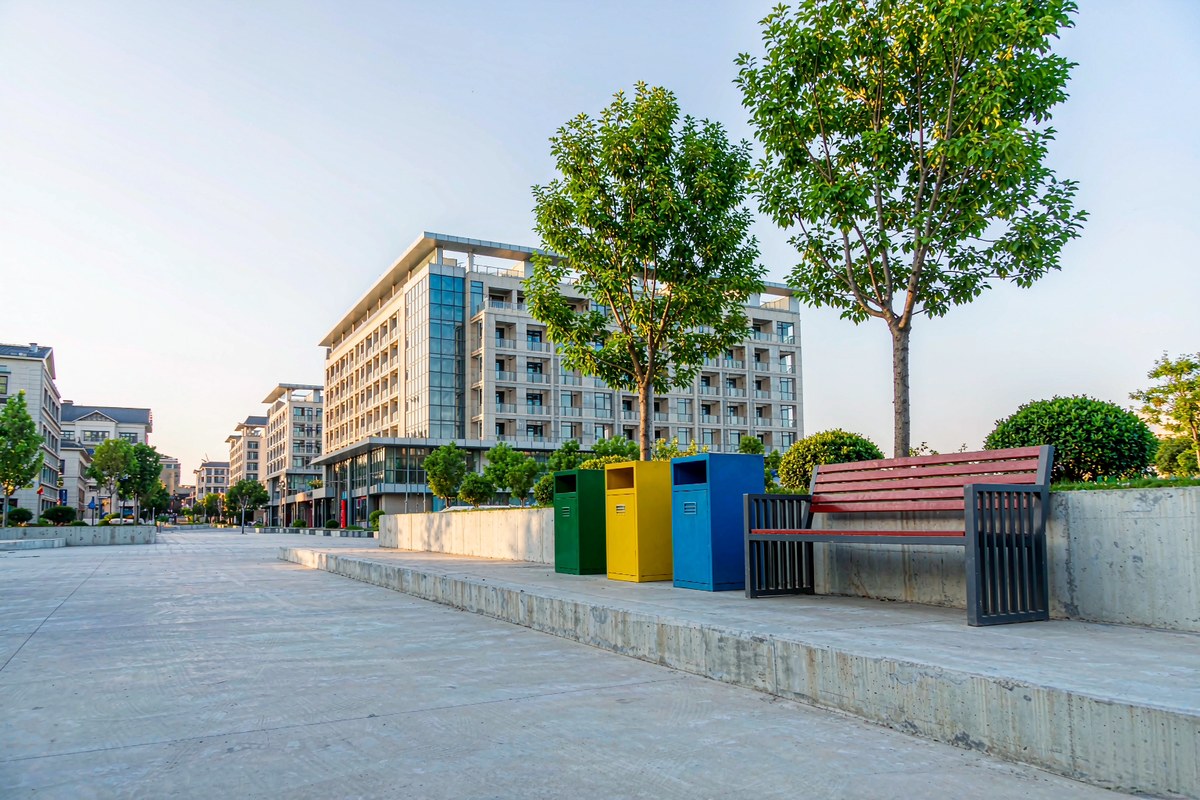
At a glance
- Color is chosen twice — the palette that suits the site, and the RAL number that gets you there. Both belong in the specification.
- Neutral frame colors (greys, graphite, dark greens) age quietly; saturated accents work best on doors, panels and seat slats.
- Light and mid tones show fading, dust and water marks less than deep blacks and bright saturated hues.
- Order the whole furniture package against one color standard, and ask for a sample panel before production starts.
Why does color matter as much as material?
Because color is what visitors judge first. Long before anyone tests a bench slat or opens a bin door, they have already decided whether the furniture belongs in the space — and that verdict is mostly chromatic. A black bin on black asphalt disappears until it overflows; a pale grey bench on pale paving reads as architecture rather than equipment. Color also does quiet operational work: a recycling pair in two clear colors sorts better than a matching pair, and a red fire-point bin or a yellow gate line does wayfinding without a single sign.
Condition is the other half. Powder coat hides a lot on day one, but the shade you pick decides how obvious the next few years will be. Scratches, chalking and dust are all more visible on some colors than others — which makes color a maintenance decision as much as a design one.
How do you match colors to the setting?
Start from what the site already owns: paving, facades, planting, signage. A few patterns repeat across parks, streets and campuses:
- Green and park settings. Dark greens, browns and charcoal let furniture sit back and let planting lead. These shades also forgive organic dirt and irrigation splash.
- Urban plazas and streets. Mid-grey and graphite frames read as neutral against concrete and granite, while bin doors or seat slats in a single accent color keep the scheme from going flat.
- Branded environments. Campuses, retail streets and waterfronts often carry a corporate or civic palette. Put it where color has meaning — recycling doors, planter rims, bench slats — and keep the structural frames neutral so the accent stays legible.
The practical rule: one frame color across every product type on the site, accents only where color does a job. A site where each furniture category has its own idea looks busy even when every individual piece is well chosen — the bin range, bench ranges and planter ranges should share one palette, not three.

Dark or light: how does the shade affect heat, fading and upkeep?
Shade changes physics before it changes style. Dark surfaces in full sun run noticeably hotter to the touch, which matters on seat slats and anything people lean on. Very deep or highly saturated colors are also where early fading and chalking show first, because any UV-driven change has further to travel from the original tone. Light and mid tones — greys, greens, earth colors — are the forgiving middle: dust, water marks and gradual UV change simply show less.
Finish texture matters too. A fine-texture matte scatters light and hides small imperfections; a high gloss reads sharper but shows every scratch and water mark. For public sites that get cleaned by crews rather than conservators, texture is usually the safer default.
None of this means avoiding dark colors — charcoal frames on timber benches are a classic for good reason. It means placing them knowingly: dark on frames and legs where heat and wear matter less, mid tones on large flat panels and seating surfaces.
What should you confirm with the manufacturer before ordering?
Most color problems are specification problems, and they are cheap to fix before production:
- Specify the RAL number, not the adjective. "Green" covers hundreds of shades; RAL 6005 and RAL 6018 are different products. Write the number into the purchase order.
- Ask for a sample panel. A sprayed coupon in the actual finish beats any screen. Check it in the site's own light, next to the paving.
- Confirm batch consistency. On larger orders, ask that all parts of one color ship from the same coating batch so a bench and its neighboring bin do not disagree about what "grey" means.
- Ask about touch-up. A matching touch-up pen or aerosol for the exact RAL and gloss level turns later scratches into a five-minute fix.
If you are planning a whole furniture package — bins, benches, tables and planters in one palette — send us the color scheme and site photos and we will confirm the RAL options per range before you commit.
How does the coating system behind the color affect service life?
The shade is only the top layer. What keeps a color looking chosen rather than faded is the system under it: surface pretreatment, coating thickness and edge coverage decide whether powder coat survives scratches, salt and UV. We compare the two main outdoor coating systems in our powder coating vs fluorocarbon guide, and the maintenance side — washing, inspecting, touching up — in our rust prevention guide and our stainless bin cleaning guide.
That is also why color should be chosen together with expected service life: a bright accent on a sheltered plaza is a different commitment than the same accent on a coastal promenade. The material-level trade-offs behind that choice are set out in our bin service life comparison.
Frequently asked questions
- Which powder coat colors keep their look longest outdoors?
- Light and mid tones — greys, dark greens, earth colors — keep their look longest in practice, because dust, water marks and gradual UV fading simply show less on them than on deep blacks or bright saturated hues. Finish quality matters as much as hue: a well-pretreated, properly cured coating outlasts the color trend either way, so treat the RAL number and the coating specification as one decision.
- Can outdoor bins and benches be ordered in a custom RAL color?
- Yes. Powder coating is specified by RAL number, so steel ranges such as litter bins, bench frames and planters can be finished in a chosen shade. Confirm the exact RAL and gloss level with the manufacturer, and ask for a sample panel before production. Wood slats and stainless surfaces keep their own finish, so the palette should account for them too.
- How do I keep colors consistent across bins, benches and planters on one site?
- Choose one frame color for every product category, put accent colors only on doors, panels and slats where they do a job, and order the package as one batch against one written RAL standard. Keep the color codes on file so replacement parts ordered years later match the original scheme.
Planning a furniture package in one palette? Send us your RAL references and site photos, and we will match the ranges.
Get a quote