
At a glance
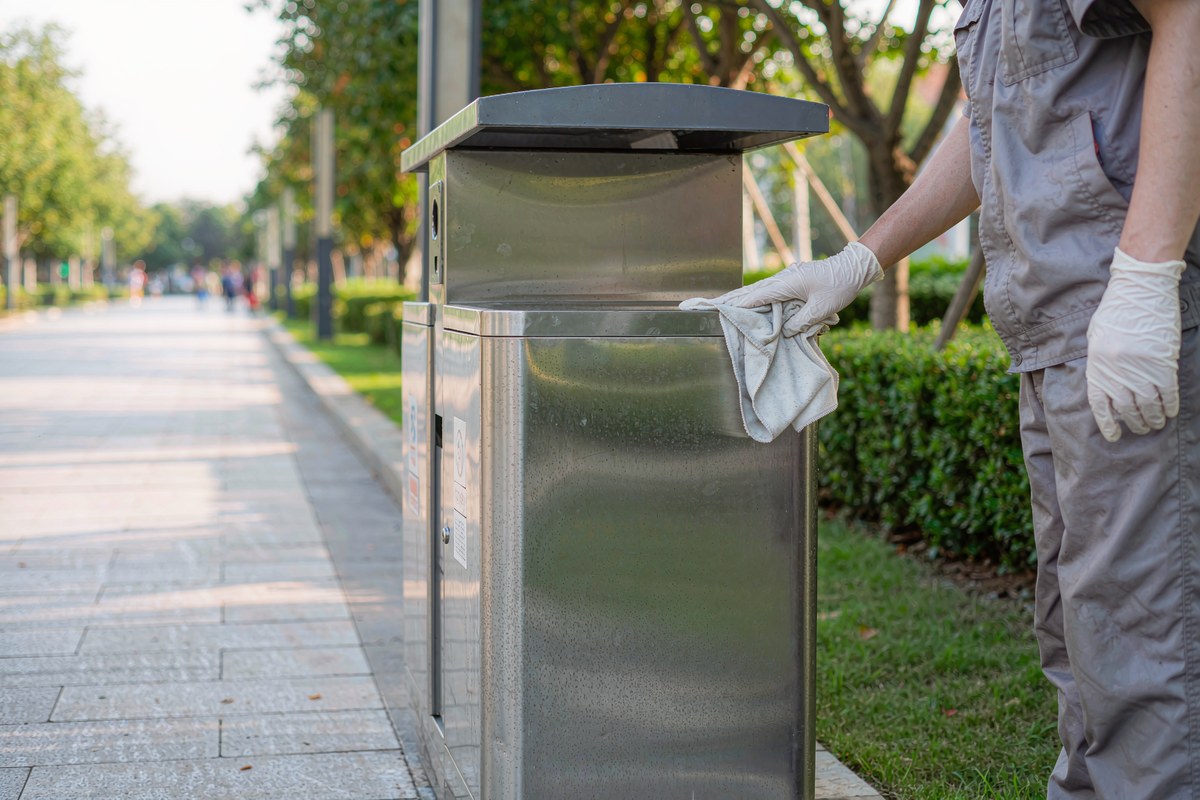
- Mild detergent plus warm water and a soft cloth is all a stainless bin needs for routine washing.
- Always wipe along the polishing grain — cross-grain scrubbing opens visible scratches.
- Never use chlorine bleach, wire wool or gritty powder cleansers on stainless surfaces.
- Rinse weekly in urban sites, more often near the coast, and dry after washing to prevent tea staining.
Why does scratching matter on a stainless steel bin?
Stainless steel resists corrosion through a thin, invisible chromium oxide layer on its surface. When cleaning drags hard particles across the finish — grit from a dirty rag, wire bristles, or abrasive powder — it cuts fine grooves into that surface. Scratches are not just cosmetic: they trap moisture, dirt and salt against the metal, and the trapped deposits eventually break down the passive layer in exactly those spots. The result is tea staining, those brown streaks people mistake for the bin "rusting through".
Grain direction matters on brushed finishes. A brushed 304 panel is polished in one direction, and any scratch that runs across the grain stands out immediately and cannot be blended out on site. Cleaning along the grain, by contrast, keeps the highlight lines even and makes light marks practically invisible. That is why professional crews are trained to spot the grain before the first wipe, not after the first complaint.
Scratching also affects how the bin reads from a distance. A scratched stainless surface scatters light and looks dirty even when it is clean, which shortens the perceived service life of the whole installation — including the stainless ash columns and bollards around it.
What cleaning routine keeps stainless bins looking new?
The routine is simple and cheap, which is the good news. For a bin in a normal urban street or park, a weekly rinse with clean water removes dust and pollen before they build up, and a monthly wash with a few drops of mild dish detergent in warm water handles grease and fingerprints. Use a microfibre cloth or a soft nylon pad, work along the grain, rinse with clean water and finish by drying with a second cloth — air drying in hard-water areas leaves mineral spots that look like stains.
Frequency should rise with exposure. Bins within a few kilometres of the coast, near road de-icing in winter, or beside kitchens and food courts accumulate salt and chlorides much faster, so shorten the cycle to every one or two weeks. This directly extends service life, as we discussed in our article on how long outdoor litter bins last by material.
| Site condition | Routine rinse | Full detergent wash |
|---|---|---|
| Inland urban street or park | Weekly | Monthly |
| Coastal promenade, within 1–2 km of sea | 2–3 times per week | Every 1–2 weeks |
| Food court, market or transport hub | Daily wipe-down | Weekly |
| Winter roads with de-icing salt | After each salting event | Every 1–2 weeks |
Which products help, and which ruin the finish?
Keep the kit short: pH-neutral detergent, warm water, microfibre cloths, a soft nylon pad for stubborn spots, and a dedicated stainless cleaner with citric acid for mineral deposits. That list covers everything a city crew meets in a normal week. What to leave out is just as important — the table below is the checklist we give facility teams.
| Do | Don't | Why |
|---|---|---|
| Mild detergent + warm water, soft cloth, along the grain | Chlorine bleach or hypochlorite cleaners | Bleach attacks the passive layer and causes pitting |
| Citric-acid cleaner for hard-water and tea-stain marks | Wire wool or steel brushes | They shed carbon-steel particles that rust on the surface |
| Rinse and dry after every wash | Abrasive powder cleansers and scouring creams | Grit cuts cross-grain scratches that trap dirt |
How do you deal with tea staining, rust marks and graffiti?
Tea staining and light rust marks usually respond to a non-abrasive pad with a citric-acid-based stainless cleaner, worked along the grain, followed by a thorough rinse. The marks are surface contamination — iron particles from nearby grinding work, steel wool residue, or carbon-steel fasteners — sitting on top of the stainless, so they come off without damage if you resist the urge to scrub hard. If marks return in the same spots after cleaning, check for dissimilar-metal contact on the bin itself, such as ordinary steel screws, and have them swapped for stainless fixings.
Graffiti needs a dedicated, non-abrasive remover rated for brushed stainless, tested on a small area near the base first. Persistent paint spots can be lifted with a plastic scraper held almost flat, again along the grain. Never reach for a grinder flap disc: the heat and cross-grain swirl it leaves cannot be matched to the factory finish in the field. For deeper repairs, replacing the affected panel is cheaper than it looks — most LVEN outdoor litter bins are designed with serviceable panels and replaceable inner liners for exactly this reason.
Where budgets allow, specifying 304 stainless with a food-grade brush finish for the shell and keeping the less visible structure in galvanised steel balances cost and appearance. We explain the trade-offs further in our comparison of stainless steel vs powder-coated steel litter bins, and our guide on preventing rust on outdoor steel furniture covers the protective side of maintenance.
If your team needs a cleaning schedule written into a supply contract, or a bin specification matched to a coastal or high-traffic site, contact LVEN with your site details — you can also browse our completed public space projects to see how different finishes perform.
Frequently asked questions
- Can you use bleach on stainless steel bins?
- No. Chlorine bleach attacks the passive chromium oxide layer that protects stainless steel, causing pitting and rust staining that cleaning cannot reverse. Use a mild detergent in warm water instead, and rinse any accidental bleach splash off the surface immediately.
- Why is my stainless steel bin showing rust marks?
- Most rust marks on stainless bins are surface contamination, not corrosion of the bin itself: iron particles from nearby grinding, steel wool residue or carbon-steel fasteners rust on top of the stainless surface. Clean with a non-abrasive pad and a citric-acid or dedicated stainless cleaner, and the marks usually come off.
- How often should outdoor stainless steel bins be cleaned?
- In a typical urban location, rinse with clean water weekly and wash with mild detergent monthly, drying with a soft cloth. Coastal or high-pollution sites need a shorter cycle, roughly every one to two weeks, because salt and deposits hold moisture against the surface and eventually cause tea staining.
Need this specified for your own site? Send us the scene, quantity and finish requirements.
Get a quote