
At a glance
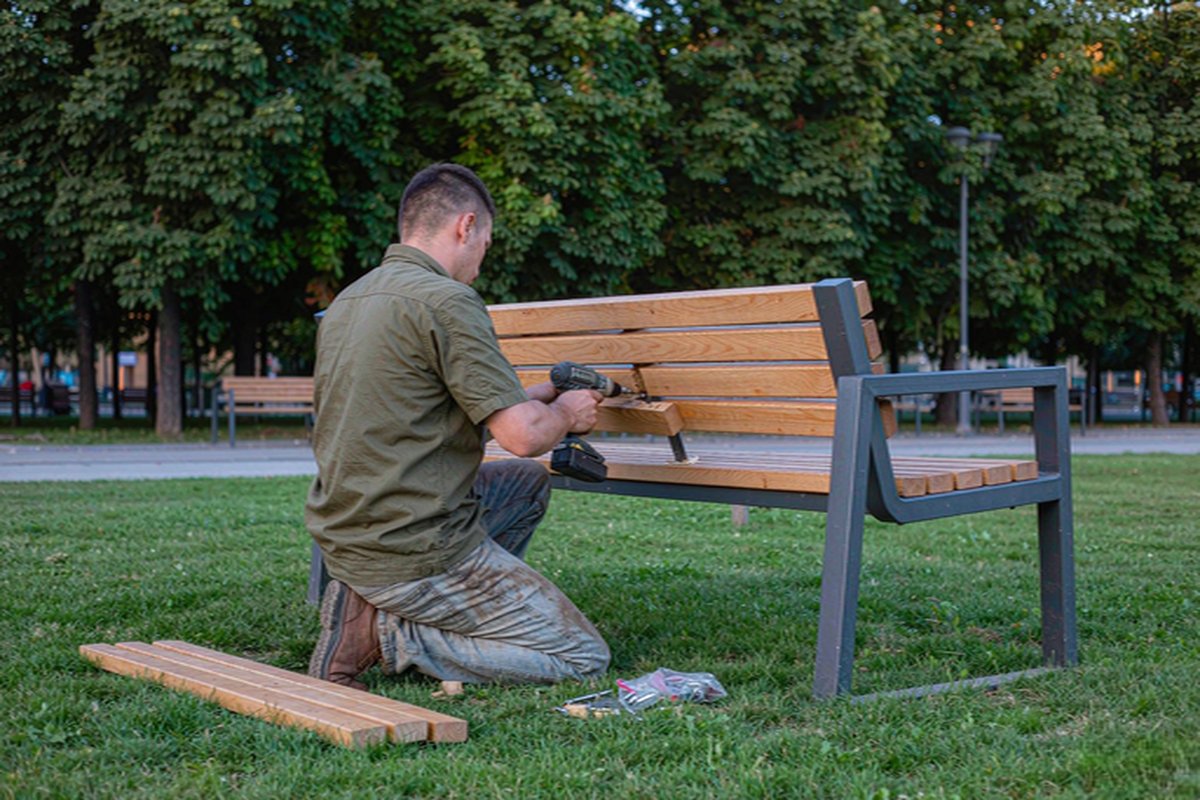
- Benches with individually bolted slats allow one-slat replacement instead of full seat refurbishment
- Hardwood and HDPE replacements need different fixings, gaps and edge treatment
- Keep spare slats and stainless screws from the original order; colour-matched composites age with the bench
- Typical on-site time: 15 to 60 minutes per bench with a cordless drill and hand tools
Why do park bench slats fail in the first place?
Seat slats take more abuse than any other part of a bench. They carry the load of every sitter, they are touched constantly, and they face the weather from above with no shelter. In public parks the three most common failure modes are moisture damage on hardwood, UV surface degradation on plastics and composites, and impact damage from vehicles, mowers or vandalism.
Hardwood slats such as Merbau and other dense tropical species usually fail gradually: the surface greys, fine checks open along the grain, and water sits in the checks until a slat splinters at an edge. Composite and HDPE slats tend to hold up structurally but may fade or chalk under strong sun, which is a cosmetic rather than a safety issue. Steel slats rarely fail on their own; the risk is a chipped powder-coat edge that lets rust spread under the coating.
None of these failures require replacing the whole bench, but all of them require the right starting design. That is what separates a five-minute repair from a full seat rebuild.
Which benches can be repaired on site, and which cannot?
The decisive question is how each slat is attached to the frame. On a well-specified park bench, every slat is fixed with two or more countersunk stainless screws into the steel frame or into cast mounting brackets. Each slat is an independent part: remove the screws, slide the slat out, fit the new one. Nothing else on the bench is disturbed.
Problems appear on three design types. Benches with welded, one-piece sheet seats cannot take a slat replacement at all; damage means panel repair or replacement. Benches whose slats are glued or clipped into continuous channels often need the whole row released to extract a single slat. And benches using proprietary fixing systems can be repaired only with the original manufacturer's clips, which is worth knowing before you award the contract, not after.
When comparing quotations, ask suppliers one specific question: if one slat is vandalised next year, what exactly is the replacement procedure? A manufacturer with genuine production depth, such as LVEN with over 410 patents across its bench and bin ranges, will answer with the fixing detail and spare-part logic, not a brochure page. More about LVEN's production background shows why this matters for long-term maintenance budgets.
How do you replace a slat step by step?
On a standard bolted-slat bench the job is deliberately boring, which is exactly what a maintenance crew wants:
1. Remove the failed slat. Unscrew the countersunk stainless screws on both ends. If a screw is seized, use an impact driver rather than force; stainless screws in steel frames rarely seize if they were fitted with anti-seize compound at the factory.
2. Check the neighbouring slats. The neighbours have absorbed the same weather and the same loads. If they show the same cracking or greying, replace the whole run while the crew and tools are already on site; the marginal labour cost is small.
3. Fit the replacement. Slide in the new slat, align it flush with its neighbours, and fasten with new stainless screws of the same grade. For hardwood, seal any cut ends with end-grain wax before fitting. For HDPE, leave the manufacturer's thermal-expansion gap; do not pull the slat tight against its neighbours.
4. Touch up and record. Treat any bare steel around drilled holes with a rust inhibitor or coating touch-up pen, and log the repair so spare-part stocks get replenished.
Hardwood or HDPE: what changes in the replacement part?
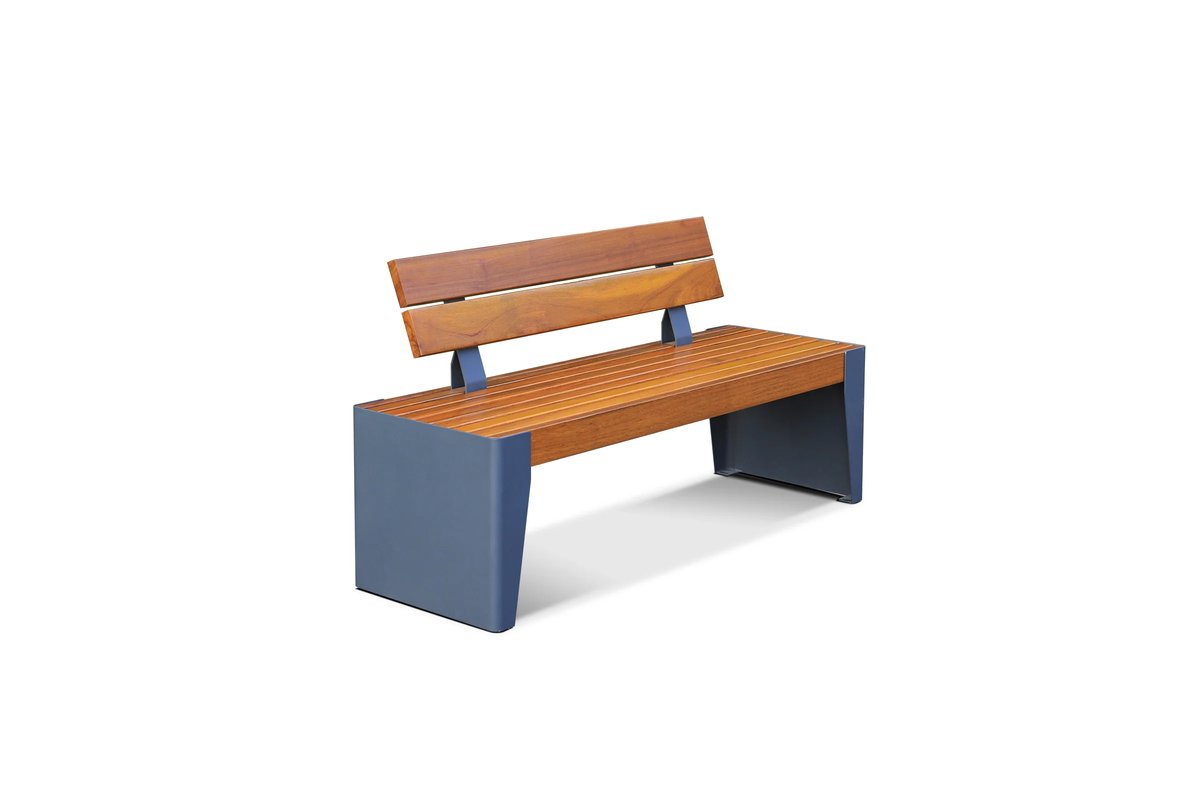
The replacement slat must match the original system, not just the colour. The two common slat materials behave differently on site:
| Aspect | Hardwood slat (Merbau / teak) | HDPE / composite slat |
|---|---|---|
| Fixings | Countersunk stainless screws, pre-drilled holes | Same fixings, but watch torque: plastic strips easily when overtightened |
| Gaps | Fixed 5 to 8 mm drainage gaps | Wider gap for thermal expansion in full sun |
| Edge treatment | Seal cut ends with end-grain wax; sand sharp arrises | No sealing needed; cut edges are through-coloured |
| Colour over time | Weathers to silver-grey unless oiled | UV-stabilised colour holds, but new slats stand out against aged ones |
The last row is the practical trap. A brand-new hardwood slat next to five-year-old weathered slats looks mismatched until it weathers or is oiled to match; a new composite slat holds its factory colour next to a slightly faded run. For high-visibility sites, crews either replace the full visible run or plan the swap for a scheduled refurbishment. Our earlier comparison of wood, composite and aluminium bench slats covers this trade-off in specification terms.
How should you plan spares so repairs stay this simple?
On-site repair only stays cheap if the spare parts exist. When ordering benches, add a spare-parts line to the same purchase: typically two to five percent of the slat count, plus a box of the exact stainless screws used. Store them dry, labelled by model. Because slat profiles and fixing centres differ between models, a "similar looking" slat from another supplier usually will not sit flush, so parts sourced from the original manufacturer are the safe default.
Pair the spares with a simple inspection rhythm: twice a year, walk the site, note cracked or splintering slats, and batch the replacements. Municipal clients who combine this with the siting logic from our bench spacing guide generally find that slat maintenance becomes a scheduled, low-cost routine instead of an emergency.
If you are specifying new benches or need replacement slats for an existing fleet, send LVEN the model, slat profile and quantity and we will quote the matching parts together with the fixings.
Frequently asked questions
- Can you replace just one slat on a park bench?
- Yes, if the bench was built with individually bolted slats. Each slat is unscrewed from the frame and a matching hardwood or HDPE replacement is fitted with the same stainless fixings, usually in 15 to 60 minutes per bench. Welded one-piece seats cannot be repaired this way.
- What tools do you need to replace a park bench slat?
- Basic hand tools are usually enough: a cordless drill or driver, the correct bit for stainless screws, replacement slats, matching stainless screws, and a rust inhibitor or touch-up pen for any drilled steel. No welding or frame dismantling is required on a bolted-slat bench.
- How often should park bench slats be inspected?
- Most public programmes inspect bench slats twice a year, typically in spring and autumn. Check for cracks, splinters, loose fixings and UV greying, and reorder spare slats before the damaged ones become a splinter or safety complaint.
Need replacement slats or a bench fleet designed for easy maintenance? Send us the model and quantity.
Get a quote