
At a glance
- Odour is a design problem before it is a cleaning problem: open tops, worn liners and standing water do most of the damage.
- Covered openings and hoods keep rain out and smells in; removable metal liners make emptying and washing fast and hygienic.
- Siting matters: a bin in moving air and out of damp, windless corners dries faster and smells less than one tucked behind planting.
- A steady rhythm — wash, dry, inspect the liner and the door seals — beats emergency deep cleans after the first complaints arrive.
Why do outdoor litter bins smell in the first place?
Three ingredients have to meet before anyone complains: organic waste, moisture and time. Food wrappers with residue, drink cups and dog waste bags feed the bacteria; rain that blows in through an open top or a missing lid soaks the load and pools under the bag; and warm weather then doubles the speed of everything. The liquid that collects at the bottom of an over-tight or punctured bag is the worst offender — it cannot be emptied by pulling the bag out, so the smell survives every collection until someone washes the bin properly.
Pests follow the same logic. Flies and wasps need access and food, and both arrive through open tops, damaged doors and spills around the opening. A bin that is emptied on time but never cleaned is, from an insect's point of view, a feeding station with a queue.
Which bin features keep odour and pests down?
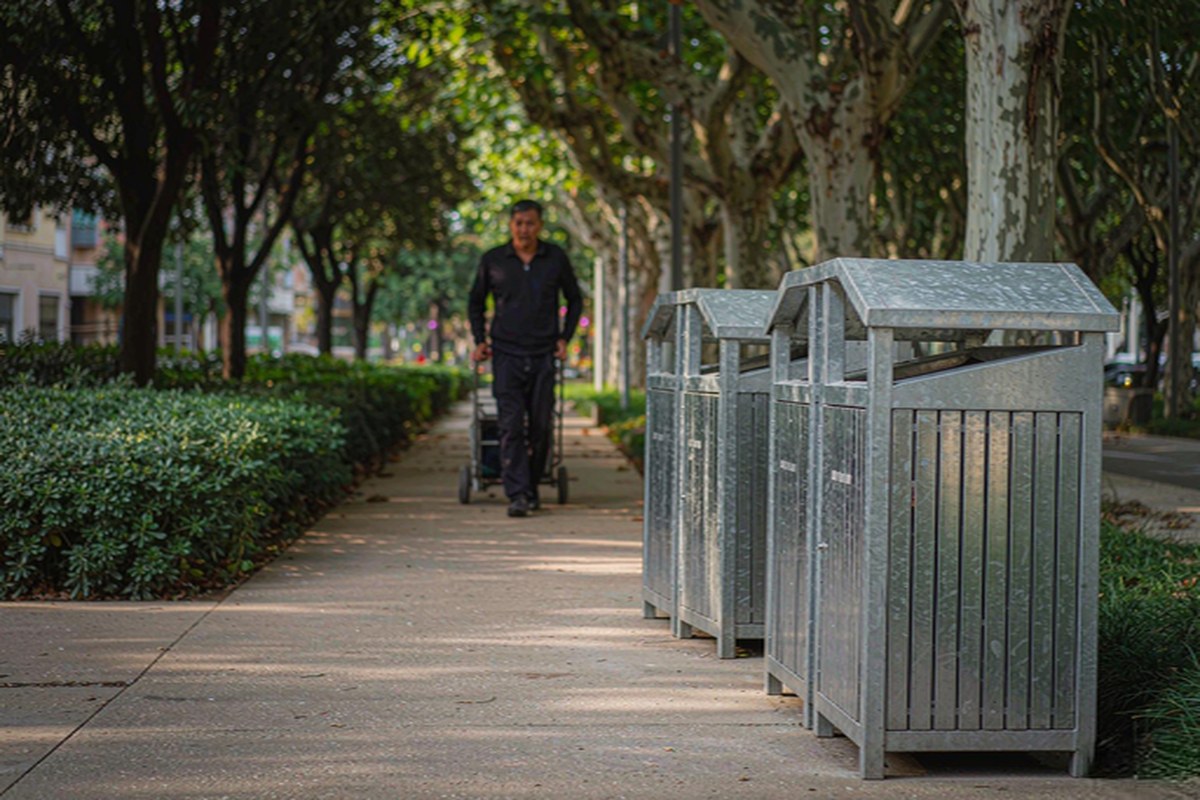
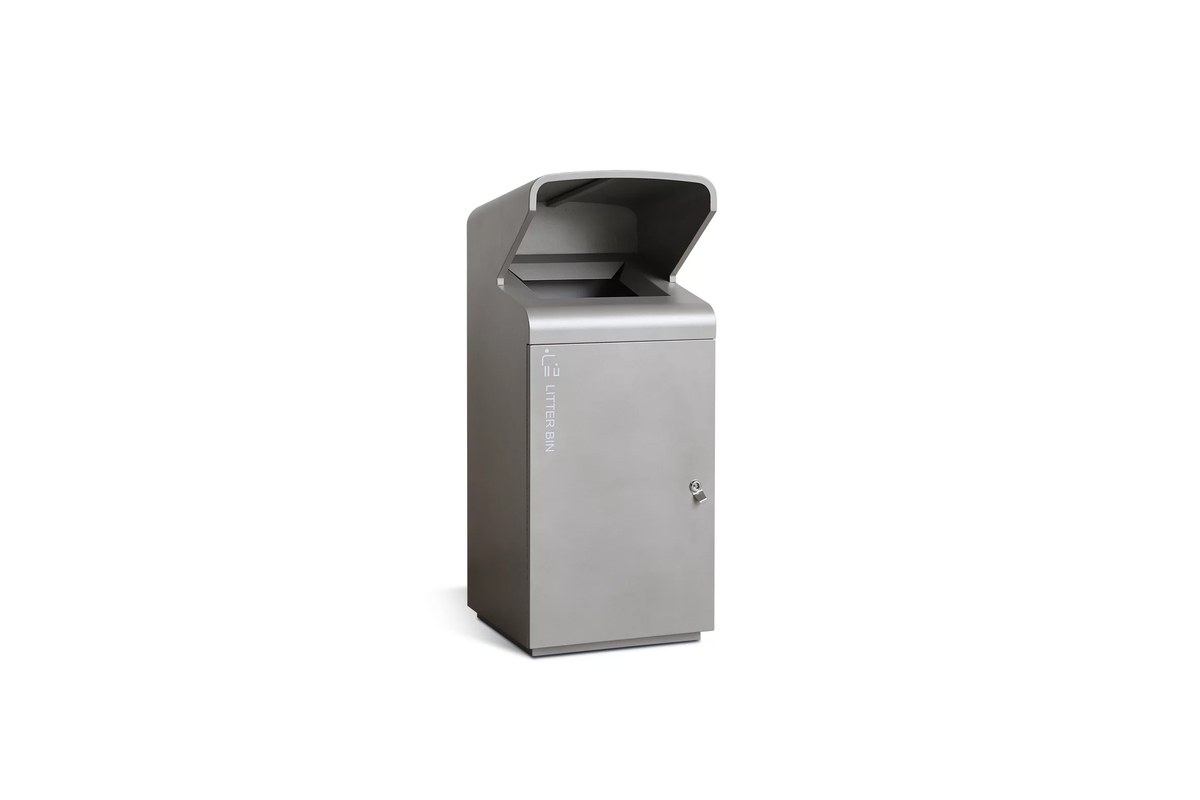
Specification does most of the quiet work here. A hooded or covered opening keeps rain out, shades the load and hides the waste from view — the OTB-84 pairs a 90 L capacity with a hooded top, while the OTM-02C uses a covered front opening. Flip-top lids such as the interchangeable coloured lids on the OTB-37 close the opening between uses. Lockable service doors keep insects, foxes and curious hands out of the load between collections, and pre-drilled base holes with anchor bolts stop the bin itself being tipped over and spilled.
Inside the shell, the removable metal inner liner is the feature maintenance teams appreciate most: the crew lifts out the liner, swaps the bag and carries the whole unit away for washing if needed, instead of wrestling a bag out of a fixed body. Our bin liner matching guide covers liner sizes and gauges; the ranges behind these features sit in our outdoor litter bin section.
Where should bins be sited so smells matter less?
Placement decides who notices a bin before its lid does. Keep bins away from dining and seating zones — café terraces, picnic tables and playground edges all have their own distance rules, and the playground siting logic is covered in our playground seating and bins guide. Prefer spots with moving air over damp, windless corners: airflow dries splash zones and disperses the faint smell every bin produces. Direct sun bakes the load and accelerates decomposition, so a spot with light shade is kinder than full exposure, provided it is not so shaded that nothing ever dries.
Finally, put bins on the natural walking line near decision points rather than hiding them behind planting — a bin people actually use catches waste before it is carried to a bench, and a bin nobody uses becomes an overflowing advertisement for the problem.
What servicing routine keeps bins fresh?
Frequency first: a bin emptied at half capacity smells far less than one emptied after overflow, so route planning beats reactive collection. Our collection route planning guide covers the scheduling side in depth. Then the wash rhythm: a regular cycle of washing the liner and the interior, rinsing the opening area, and drying before re-bagging removes the residue that collections alone never touch. For stainless bodies, follow the grain and avoid harsh chloride cleaners, as set out in our stainless bin cleaning guide.
Between washes, inspection is the cheap half of the job: check that lids close fully, that door seals are intact, that liner bags are the right size and not punctured, and that drainage at the base has not silted over. Any one of those failures quietly undoes the rest of the routine. Spills around the opening deserve immediate attention — residue there attracts more insects than the waste inside the bin.
How do you handle seasonal peaks?
Odour problems are seasonal by nature. Warm months, festivals, markets and holiday weekends all multiply the organic load, and the routine that worked in April will not hold in July. Plan for a seasonal uplift — shorter collection intervals, a faster wash cycle and a stock of spare liners — rather than reacting to complaints after the first hot weekend. If usage is growing year on year, upgrading capacity on the busiest points (the 90 L OTB-84 class, for example) is usually cheaper than adding stops. For custom configurations or a specification review against your site plan, talk to our team, and browse our project references for comparable installations.
Frequently asked questions
- Why do public litter bins smell more in summer?
- Heat speeds up the decomposition of organic waste and evaporates the liquids that collect at the bottom of the liner, so the same bin that was unnoticeable in April smells within days in July. Covered openings, shorter collection intervals and a faster wash cycle through the warm months keep it under control.
- How do you keep flies and wasps away from outdoor bins?
- Deny them access and food: covered or hooded openings, closed and lockable service doors, liners that are removed rather than just tied off, and bins anchored so they cannot be knocked over and spilled. Clean spills around the opening promptly — residue there attracts more insects than the waste inside.
- How often should outdoor litter bins be emptied?
- Often enough that bags are never compressed or overflowing — a bin emptied at half capacity smells far less than one collected after overflow. Busy parks and streets typically need daily collection in peak season, with quieter sites adjusted to usage, and the route planned so frequency never depends on complaints.
Fighting odour complaints on a specific site? Send us the location and usage pattern, and we will match the bin specification and servicing plan.
Get a quote