
At a glance
- A roof deck changes the brief: higher wind, full sun, structural load limits and lift-only access replace ground-level assumptions.
- Weight is a planning item, not an afterthought — confirm load limits with the structural engineer before planters and tables are chosen.
- Planters with mass low in the base and furniture that is anchored or inherently heavy behave far better in the wind than tall, light items.
- Plan the waste route and the delivery route on day one: bins and modules both have to travel through the same lift.
What is different about furniture on a rooftop?
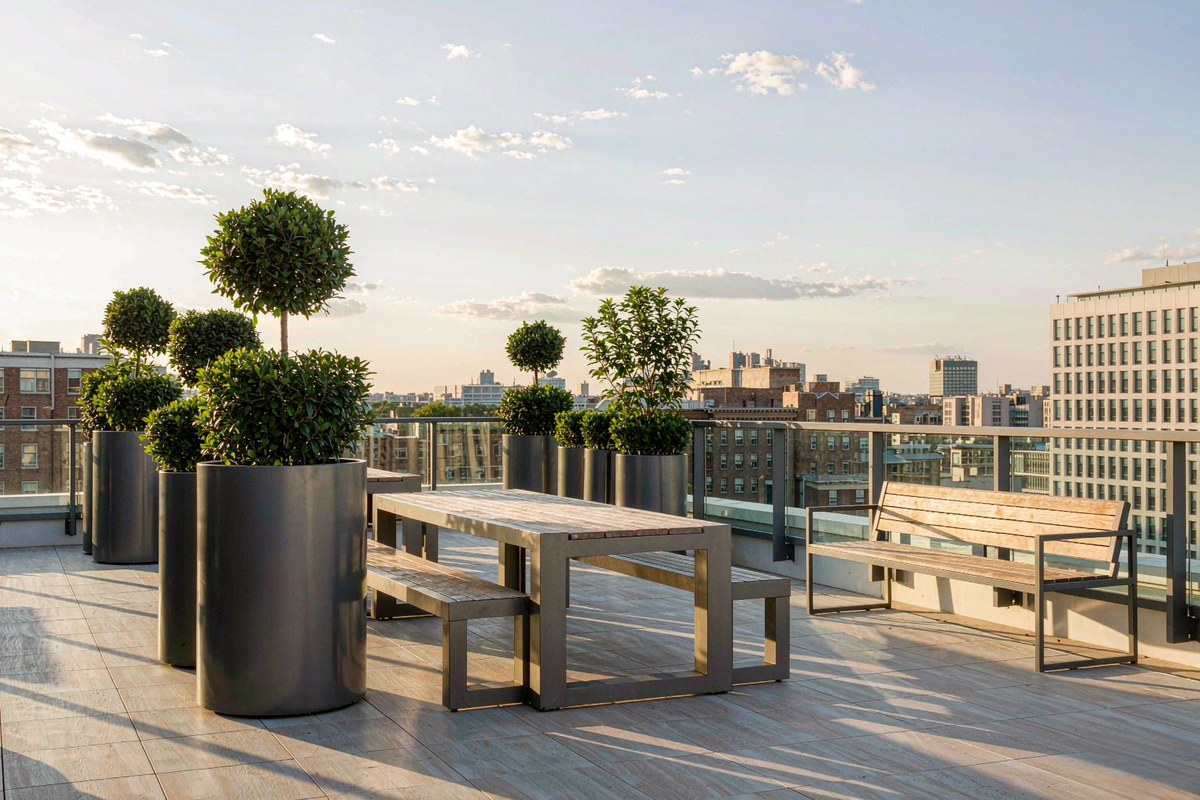
Four things change once the ground plane leaves the ground. First, wind: an exposed deck catches gusts that never reach a sheltered plaza, and light, tall items — high planters, loose chairs, thin signs — are the ones that move. Second, sun and heat: roofing membranes and pale paving reflect light upward, so surfaces face weather from two directions and seat slats run hotter than at street level. Third, access: everything, including the furniture itself and every bag of waste, arrives and leaves through a lift and a stair. Fourth, the structure: a roof is a load-limited floor, and the biggest single items on it — saturated planters above all — are usually the heaviest things in the scheme.
None of these rules out comfortable rooftop schemes; they just reorder the checklist. Weight, wind and drainage come before color and style, not after.
Which seating and tables work on a roof deck?
Seating that behaves itself on the ground still works above it, with two adjustments. Set benches with backrests slightly back from the balustrade — the view is the asset, but the edge is where wind and safety meet, and a bench hard against the edge invites leaning on the rail. For dining zones, picnic tables with attached benches earn their keep twice over: the seats cannot be rearranged into the wind or carried off, and the single heavy frame is more stable than a table with four loose chairs.
Fixings follow the deck build-up, not the furniture catalogue. A steel-framed bench that anchors to concrete at grade needs a different approach over waterproofing and insulation, and that detail should be agreed with the roofing contractor before delivery day — the principles are the same as our bench anchoring guide, with the roof build-up as the extra constraint. In full sun, mid-tone finishes and timber or composite slats stay more comfortable than dark metal seats; the material trade-offs are compared in our UV resistance guide.
How do you keep planters and furniture stable in the wind?
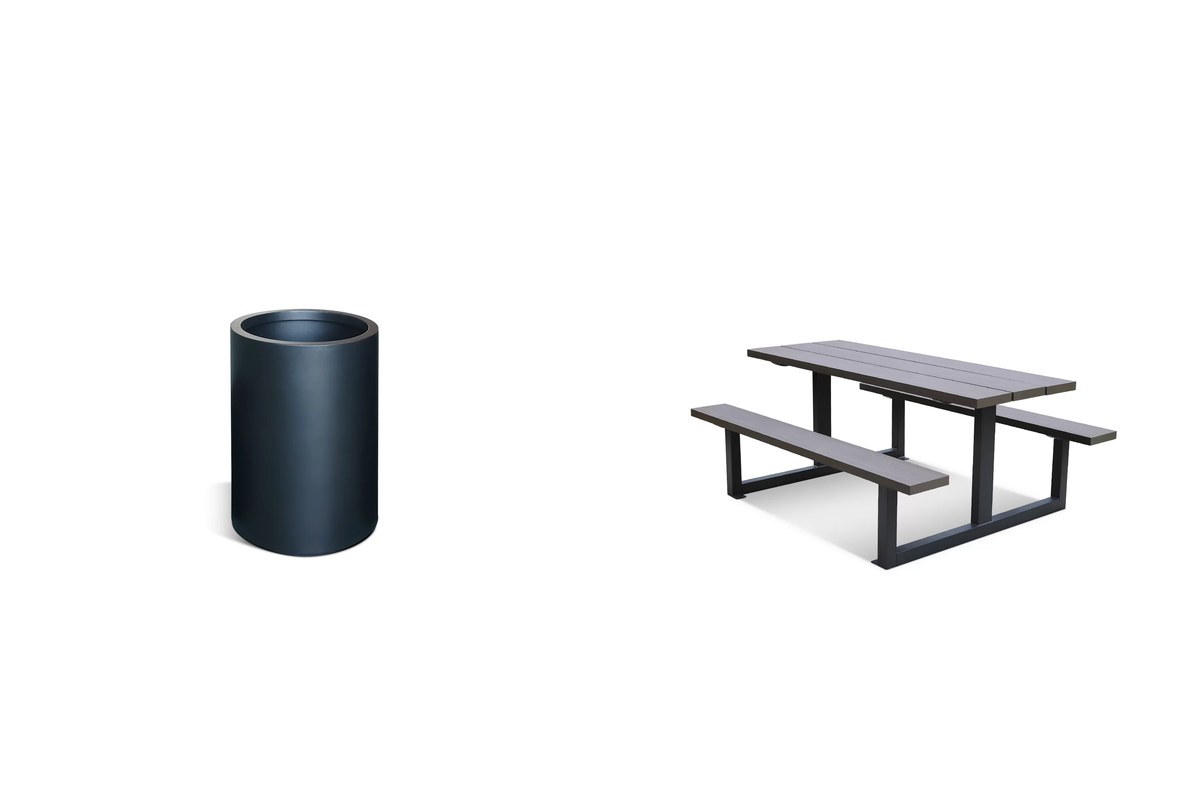
Wind strategy is mostly geometry. Planters with their mass low in the base resist tipping far better than tall, top-heavy shapes of the same volume; cylindrical and wide-footed steel planters earn their place on roofs for exactly this reason. Keep the tallest planting away from the windward edge, prune it before storm season, and use planter groups as windbreaks that shelter seating rather than sails that catch gusts.
For larger units, anchoring is the sure answer — but on a roof it has to be done without puncturing the waterproofing, which is why the fixing method belongs in the conversation with the roofing contractor, not in the furniture order form. Drainage completes the picture: every planter needs outlet holes and spacers so roots are not standing in water, a subject we cover in detail in our planter drainage guide. The planter shapes and sizes referenced above are in our planter range.
How much weight can a roof deck actually carry?
This is the one question this guide will not answer with a number, because the honest answer lives in the building's structural drawings. What the furniture side can do is make the conversation easy: list the heaviest items — usually large planters at full saturated weight, which means soil plus water, not dry soil — note where each will sit, and flag any concentrated point loads, since a planter's feet concentrate the same weight into four small pads. Spreading loads over pedestals or paving, distributing planters rather than clustering them, and preferring lighter material combinations where the deck is tight are all standard moves. Take that list to the structural engineer before ordering, and the scheme will lose nothing but risk.
What about bins, delivery and day-to-day servicing?
Waste is the daily test of any rooftop scheme. Locate bins near the lift lobby or stair head, on the natural walking line between arrival and seating — not at the scenic end where nobody carries a bag. Covered openings keep gusts from spreading litter across the deck, and the sizing logic is the same as any public site. On the supply side, check the lift's internal dimensions against the largest module in the order — tables and long benches are usually the constraint — and confirm the door route from dock to lift before choosing a two-metre bench.
Seasonal care rounds out the plan: exposed decks get more UV and more storm weather than most ground locations, so the off-season checklist in our winter protection guide applies with interest. If you are fitting out a roof terrace as part of a wider furniture package, send us the deck plan and lift dimensions and we will match ranges and module sizes to both. Installation examples from comparable public sites are in our projects and the case studies index.
Frequently asked questions
- Which furniture works well on a rooftop terrace?
- Benches with backrests set slightly back from the edge, picnic tables with attached benches for dining zones, planters used as greenery and windbreaks, and compact covered bins placed on the walking line near the lift or stair. The common thread is stability: heavy or anchored items with low centres of gravity handle rooftop wind and sun better than tall, light or loose pieces.
- How do you keep planters stable in the wind on a roof?
- Choose shapes with their mass low in the base, keep the tallest planting away from the windward edge and pruned before storm season, group planters to shelter seating rather than catch gusts, and anchor large units using a fixing method agreed with the roofing contractor so the waterproofing is not compromised. Drainage holes and spacers keep roots healthy once the planter is fixed in place.
- Do rooftop installations need special fixings for outdoor furniture?
- Yes — the deck build-up and waterproofing constrain how furniture can be fixed, so fixing details must be coordinated with the roofing contractor before delivery. Within the scheme itself, tamper-resistant hardware is as worthwhile on a roof as at grade, for the reasons set out in our anti-theft fixings guide for public benches and bins.
Fitting out a roof terrace? Send us the deck plan and lift dimensions, and we will match the ranges and module sizes.
Get a quote