
At a glance
- Campus use is tidal — lecture breaks and lunch hours load benches and bins far beyond their daily average.
- Put bins where food and footfall meet: building entrances, canteens and bus stops, not at fixed intervals.
- Steel frames with hardwood or PS plastic-wood slats balance comfort, cost and per-slat repair.
- Anchor everything and keep spares — campuses repair with their own maintenance team, not the supplier's crew.
What do campuses need that city parks do not?
A park spreads visitors across the day; a campus compresses them. Between lectures, a quad can empty and fill twice in twenty minutes, and every one of those students is carrying a coffee cup, a meal box or both. Furniture specified for a calm park average will look abandoned at 12:10. The specification therefore leans towards durable mid-size units rather than a few large ones: more bins at more points, more benches in more pockets, each engineered to take a crowd without looking institutional.
Budgets work differently too. University estates teams maintain furniture with their own staff and a modest consumables line, so repairability is a first-order requirement — a bench whose slats can be swapped individually with hand tools will outlive, by years, a welded unit that needs a workshop visit. That is also why campuses favour finishes that can be touched up locally with spray cans rather than recoated by contractors. LVEN supplies campus seating, litter bins and supporting facilities for universities, including Peking University; the projects page lists the references we can discuss publicly.
How many bins and benches does each campus zone need?
Zone by demand, not by area. Building entrances and food outlets generate several times the waste of a lawn, so every entrance pair — one litter side, one recycling side — is the baseline, with additional outdoor litter bins roughly every 40–60 m along main desire lines and one at every seating cluster. A bin people can see from where they are sitting gets used; a bin a path-length away does not.
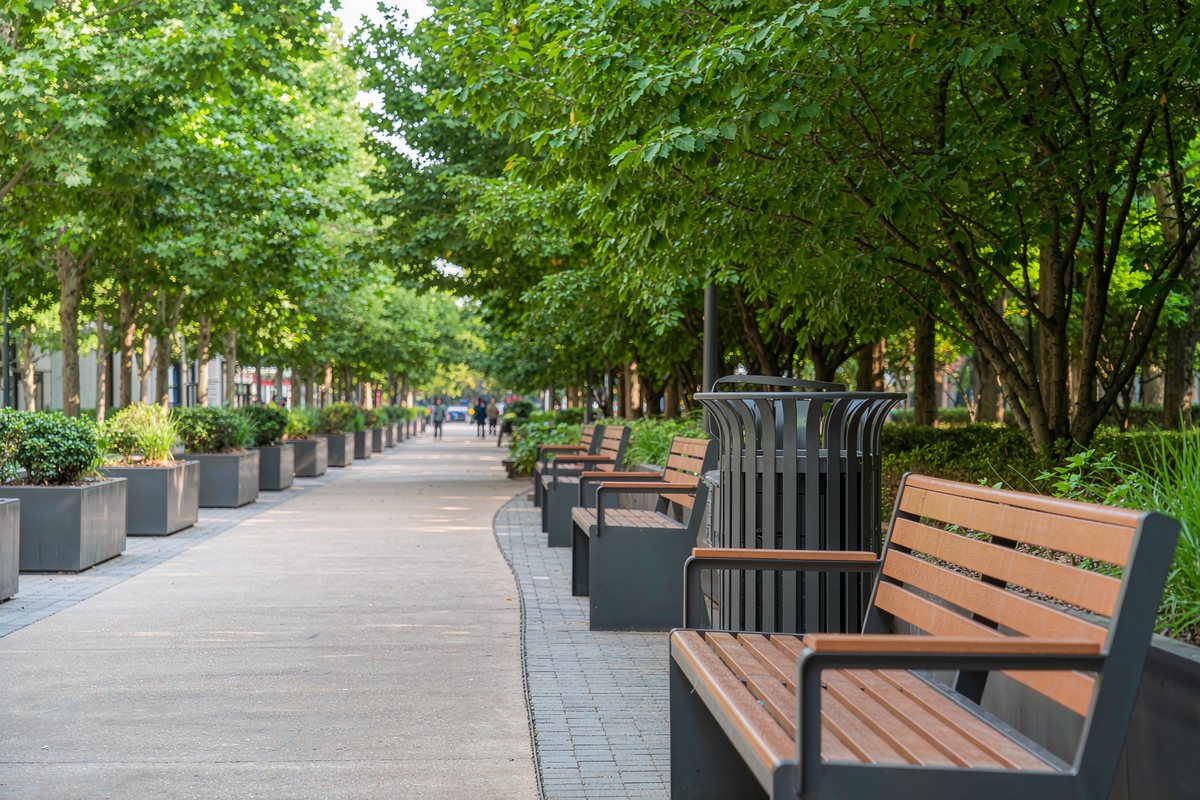
Seating follows the same logic. Place park benches where waiting and gathering already happen — outside lecture halls, beside sports courts, along the sunniest edge of the quad in cold months and the shadiest in summer — and cluster them in twos and threes so groups can sit together. As a spacing rule, a seat within two or three minutes' walk of any point on a dense campus covers accessibility needs; the detailed walk-time method is set out in how far apart park benches should be placed. Picnic tables earn their footprint near canteens and dorm clusters, where they absorb the lunch overflow that would otherwise end up on steps and window ledges.
Which materials handle student use and tight maintenance budgets?
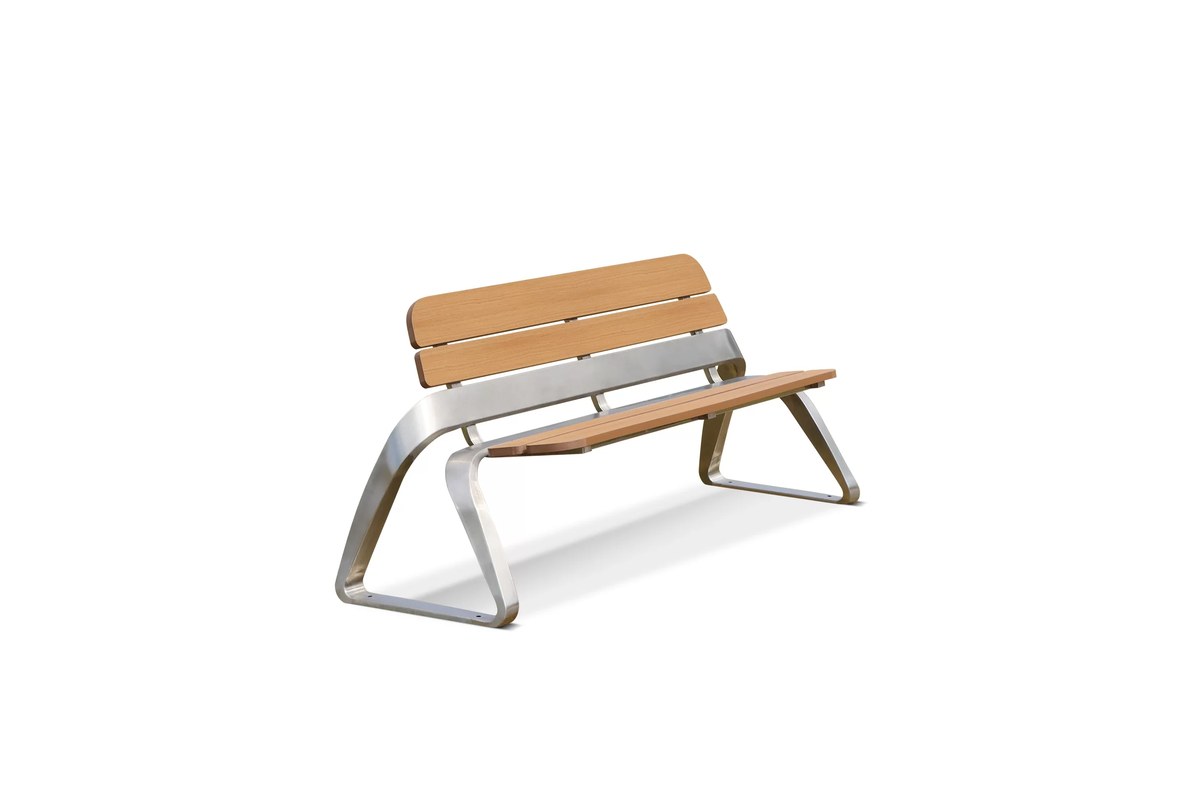
The material shortlist narrows quickly once constant contact, cleaning chemicals and frost are all on the list. Powder-coated galvanised steel carries most campus frames; the slats are where comfort and budget meet, and each option trades cost against upkeep. The table below is the comparison we walk procurement teams through.
| Material | Strengths on campus | Watch-outs |
|---|---|---|
| Hardwood slats (merbau) on steel | Natural look that suits heritage campuses; warm in winter, replaceable per slat | Needs periodic oiling to hold colour |
| PS plastic-wood / HDPE slats | No rot or splinters, minimal upkeep, wide colour choice for faculty branding | Darker colours heat up in strong sun |
| Powder-coated galvanised steel | Cost-effective, vandal-resistant, colour-matchable to campus signage | Touch up chips before rust spreads |
| Aluminium picnic tables | Light enough to rearrange for events, will not rust | Higher unit cost; anchor where theft is a risk |
Where should furniture go to actually get used?
Watch the desire lines for a week before finalising a layout. Students cut corners, gather at the sunny side of buildings and eat wherever there is Wi-Fi and shade; furniture placed on the architect's drawing rarely matches. Put benches on the desire line's edge, orient them towards the view or the activity, and back them with a wall, planter or hedge — backing matters more than it sounds, because an exposed bench with circulation on all sides stays empty while the backed one fills.
Steel planters do double duty here: they define edges and protect grass margins from shortcut paths, and at seating height they double as informal perches during peak hours. Avoid the temptation to line every path with objects — a campus with too much furniture reads as cluttered, and clutter attracts graffiti. Fewer, better-placed clusters are cheaper to maintain and get more use.
How do you phase a campus rollout without disrupting term time?
Plan installations around the academic calendar: heavy works during vacations, small swaps during weekends. Anchor types decide the pace — bolt-down bases with anti-tamper fixings install in minutes on existing paving, while embedded anchors need wet concrete and curing time, so reserve them for edges where vehicles pass. Deliveries should arrive zone by zone with fixings and spares sorted per building, because estates teams store what they receive.
Finally, budget the second year, not just the first: a set of spare slats, liners, touch-up paint and a few extra anchor kits costs little and keeps the fleet whole without a new procurement round. If you are planning a campus programme, send the zone layout and estimated headcounts to our contact page and we will return a per-zone bill of quantities with finish options.
Frequently asked questions
- How many litter bins does a university campus need?
- Place a pair at every building entrance and food outlet, then one bin roughly every 40–60 m along main walkways and at each seating cluster. Count usage after a term and adjust — near canteens demand is several times the campus average.
- What is the best bench material for campus use?
- A steel frame with hardwood or PS plastic-wood slats. The frame survives constant use and cleaning, the slats stay comfortable in sun and frost, and damaged slats can be replaced individually instead of replacing the whole bench.
- How do you stop campus benches and bins being moved or damaged?
- Fix every item down with bolted or embedded anchors and anti-tamper screws, choose heavy steel frames that are not worth tipping, and keep lockable bin doors so only facilities staff can open them.
Need this specified for your own site? Send us the scene, quantity and finish requirements.
Get a quote