
At a glance
- Powder coating is an electrostatically applied, oven-cured dry powder: tough, repairable and budget-friendly.
- Fluorocarbon (PVDF) coating is a multi-coat factory system valued for UV and colour stability in harsh sun.
- The substrate and primer decide corrosion resistance; the topcoat decides how it ages in the sun.
- Match the finish to exposure: inland plazas rarely need PVDF, coastal promenades often justify it.
What is the difference between powder coating and fluorocarbon coating?
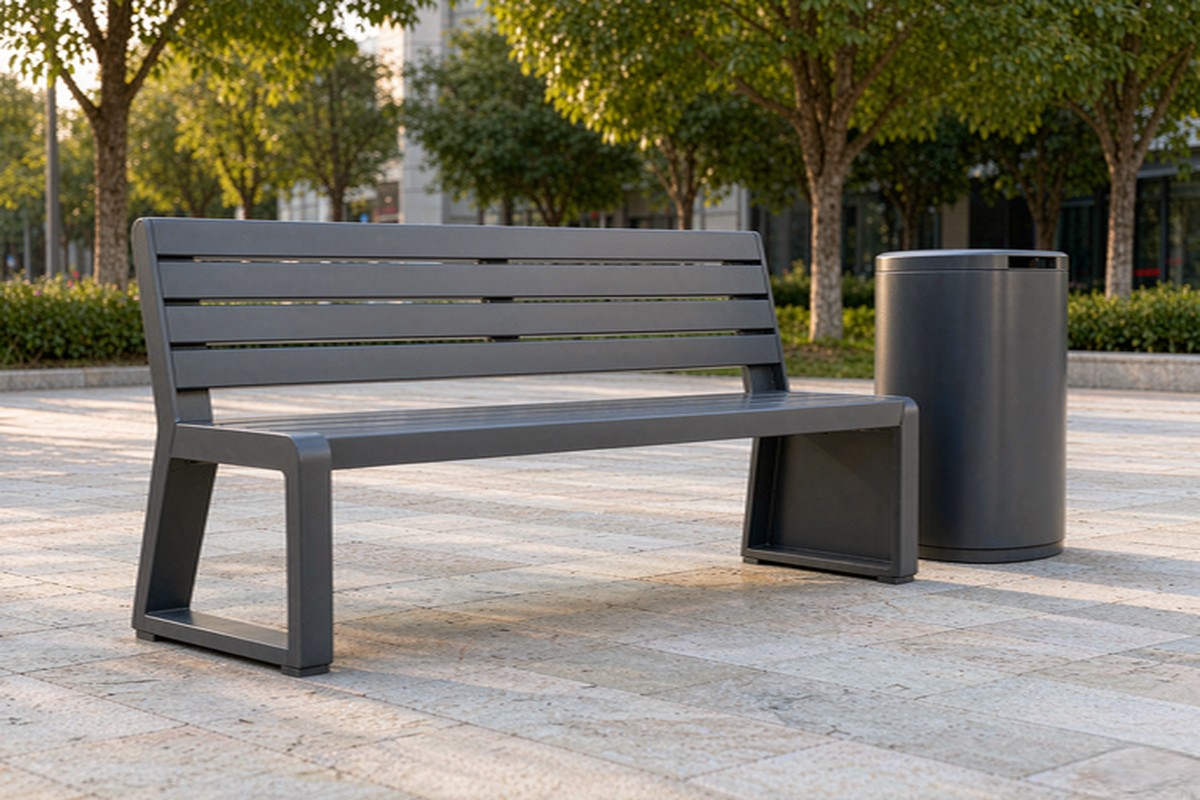
Powder coating starts as a dry powder that is sprayed onto the metal with an electrostatic gun, then cured in an oven at roughly 180–200°C. It melts, flows and cross-links into a single hard film, typically in the 60–120 µm range on street furniture. Because it is a one-shot thermoset layer, it resists chipping and impact well, and a small damage site can be sanded, filled and re-powdered locally. Outdoor polyester and polyester-TGIC-free powders are the usual chemistry for benches, bins and ash columns.
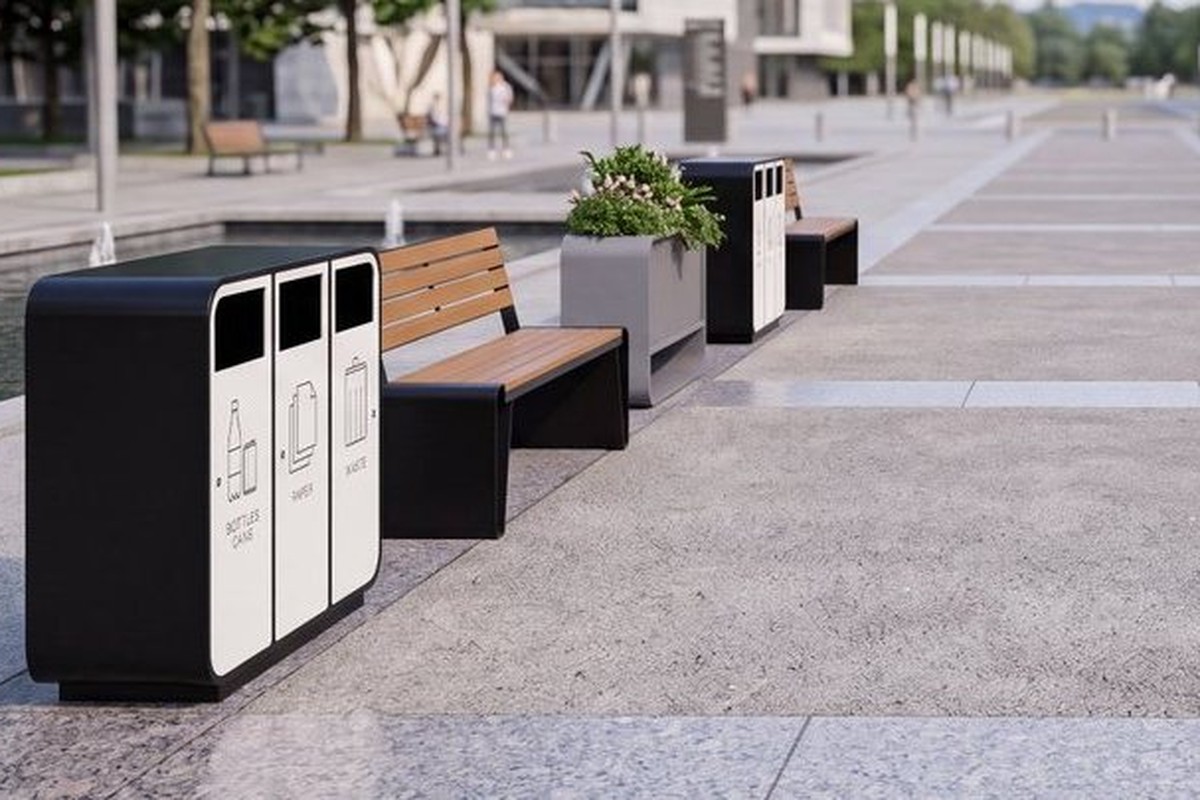
Fluorocarbon coating, in practice a PVDF-resin-based liquid system, is applied in several factory coats: a primer, one or more colour coats and a clear topcoat. Each layer is thinner, but the combination is famous in architecture for keeping gloss and colour through years of ultraviolet exposure, which is why PVDF has been the default on aluminium curtain walls for decades. In street furniture it appears on premium benches, bollards and fascia panels where the surface is doing a branding job as well as a protective one.
Which finish lasts longer in sun, salt and rain?
The honest answer is that the topcoat is only one part of the system. Corrosion starts where the coating fails: at cut edges, welds, fixings and scratches. A steel body that is degreased and phosphated, given a zinc-rich primer and then sealed properly will outlast an expensive topcoat applied over careless pretreatment. Laboratories compare finishes using accelerated tests such as neutral salt spray (ISO 9227) and UV weathering (QUV-type exposure), and reputable manufacturers can state which standard their system is referenced against.
In broad terms: powder coat films are thicker and handle impact and abrasion better, which suits the honest, matte look of most public outdoor litter bins and bench frames. PVDF systems hold colour and gloss longer under intense UV, which matters for saturated brand colours and architectural accents. In coastal environments both need support: hot-dip galvanizing or 316 stainless substrates, sealed edges and stainless fixings. We cover the wider maintenance picture in our guide to preventing rust on outdoor steel furniture.
How do the two finishes compare on cost, repair and appearance?
| Factor | Powder coating | Fluorocarbon (PVDF) coating |
|---|---|---|
| Application | One electrostatic coat, oven-cured; simple line process | Multi-coat liquid spray (primer, colour, clear) |
| UV & colour retention | Good with outdoor polyester; may chalk sooner in intense sun | Excellent; the reason PVDF dominates curtain walls |
| Impact & repair | Thick, tough film; local touch-up and re-powder possible | Thinner coats; repair usually means refinishing the panel |
| Typical cost position | Standard, budget-friendly for bins and bench frames | Noticeably higher; reserved for premium or exposed elements |
Budget follows the same logic. If a programme covers hundreds of park benches and bins, powder coating keeps unit cost and repair logistics manageable. PVDF tends to be allocated selectively, for example to coastal promenades, signature entrance features or coloured fascia panels where colour drift between batches would be visible. Neither finish makes a poor substrate good: a cheaply made body will fail at its seams before either coating has done its work, something procurement teams can screen for when they review past public-space projects.
Which coating should you specify for your site?
Start from exposure, not from the finish chart. An inland plaza with partial shade is well served by a quality outdoor polyester powder in the 60–100 µm range over a zinc-primed steel body. A seafront boardwalk with salt spray and full sun justifies either a upgraded powder system with careful edge sealing or a PVDF topcoat on the most exposed elements, paired with galvanized or 316 stainless substrates. For a comparison of how finishes interact with material choice on seating, see our breakdown of wood, composite and aluminium bench slats, and for site-level corrosion planning our coastal park bin selection guide.
Whatever you choose, put the system in writing: pretreatment method, primer type, topcoat chemistry, film thickness on flat surfaces and edges, and the test standard behind the warranty claim. Two quotations that both say “powder coated” can describe very different systems, and the difference shows up in year three, not at delivery.
Frequently asked questions
- Is powder coating good for outdoor furniture?
- Yes, when it is applied as a complete system. A degreased and phosphated or zinc-pretreated steel body, a corrosion-inhibiting primer and a quality outdoor polyester powder coat is the mainstream finish for public litter bins, bench frames and ash columns. The failure point is rarely the powder itself; it is an edge left uncoated, a thin film build or a skipped primer, which is why the full system should be part of the specification.
- What is fluorocarbon coating used for?
- Fluorocarbon coatings, usually based on PVDF resin, are factory-applied multi-coat systems best known in architecture for curtain walls and aluminium panels that keep their colour for decades of sun exposure. In street furniture they are specified where strong sunlight, brand-colour stability across many future units, or a premium architectural look justify the higher cost.
- Which coating is better for coastal areas?
- Judge the total system, not the topcoat alone. For salt-laden air, look for a zinc-rich primer, adequate film build on edges and welds, and substrate options such as hot-dip galvanized or 316 stainless steel underneath. Both a high-grade powder system and a fluorocarbon topcoat can work; ask each supplier which neutral salt-spray test standard their finish system is referenced against, and match edge sealing and fixings to the exposure.
Need this specified for your own site? Send us the scene, quantity and finish requirements.
Get a quote