
At a glance
- Placement is a pedestrian-flow decision first: entrances, door swings, accessible routes and sightlines decide where a column can stand.
- Keep every smoking point clear of doors, openable windows and fresh-air intakes, and let local smoking rules override general guidance.
- One clearly visible column per designated point outperforms several hidden ones; pair it with a litter bin where smokers also carry packaging.
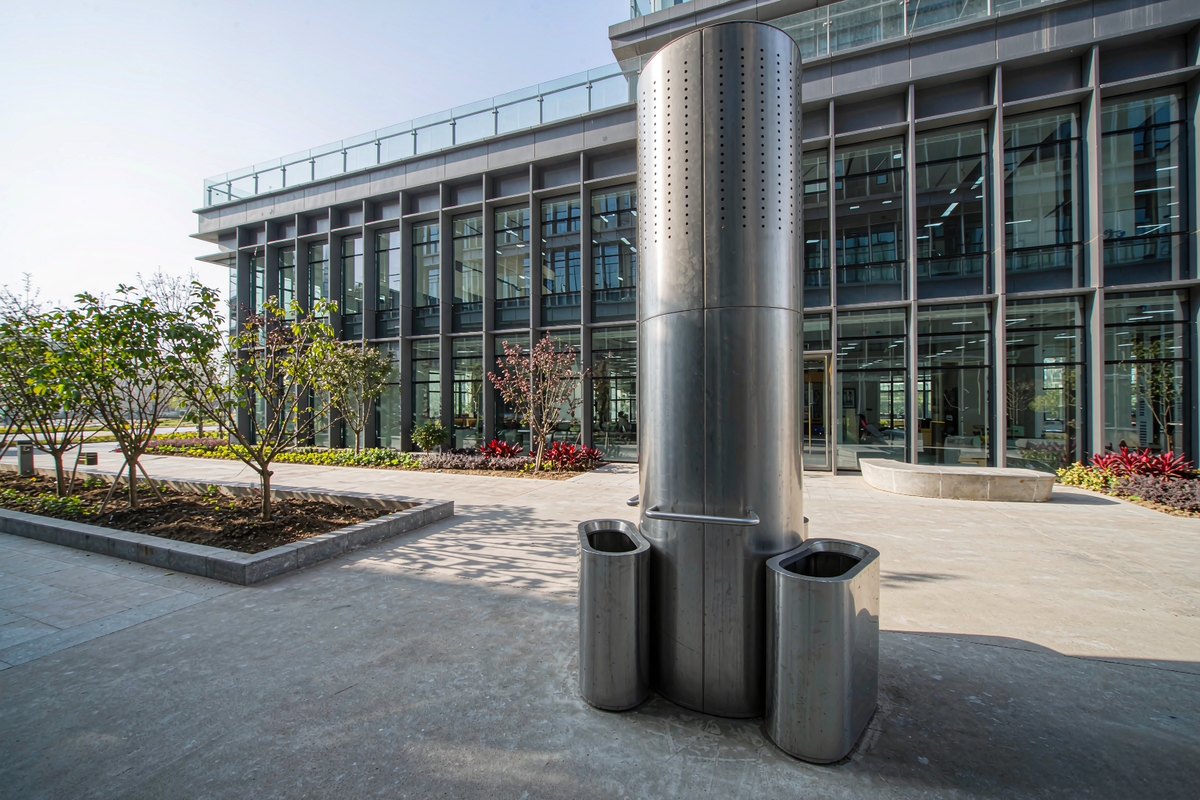
- LVEN's OTMY range covers freestanding columns in stainless steel and powder-coated galvanized steel, from 25 cm square to 29 cm in diameter and 108-118 cm tall.
Start with the flow of people, not the product
Most disappointing ash column installations share the same root cause: the model was chosen first and the position was decided last. A column is only effective where smokers already pause, so the placement exercise starts with a walk-through of the site. Mark the entrances people actually use, the door swings they must clear, the accessible routes that cannot be narrowed, and the sheltered corners where smokers naturally gather out of the rain.
Once those constraints are on a plan, the remaining open space shows you where a freestanding column can stand without obstructing anyone. That is the order that works: flow first, product second. The ash column range matters, but a well-chosen model in the wrong position will still end in butts on the ground.
How far should an ash column sit from entrances?
Smoking points belong clear of door swings, openable windows and fresh-air intakes. Many site teams use a buffer of roughly five to ten metres from an entrance as a starting point, then adjust for prevailing wind, footfall and the shape of the forecourt. Whatever general guidance suggests, local smoking rules and the building operator's own policy always override it, so confirm the distance your site must respect before you fix any positions.
Distance also has a behavioural side. If the designated point sits too far from where smokers would naturally pause, they drift back towards the door and light up along the way. A column placed at the edge of the natural gathering zone - far enough to satisfy the rules, close enough to be convenient - gets used. One placed by compromise alone gets ignored.
How many columns does a smoking area need?
Plan one clearly visible column per designated smoking point, rather than trying to calculate how many smokers share it. Add a second column when the point is genuinely large and smokers split into groups at opposite ends, or when geometry hides part of the zone behind a corner or a planted area. Visibility beats capacity: a column a smoker can see from the shelter or seating they use will collect butts; a hidden one, however large, will not.
The same sightline logic applies to the litter bin you should place alongside, because many smokers carry packaging, cups or food wrappers too. Pairing a general outdoor litter bin with each ash point keeps the whole habit in one stop - the same reasoning behind planning how many bins a park needs by zones rather than by head-count.
Where should a column stand inside an open zone?
Inside the smoking area itself, position the column at the edge of the circulation route, not in it. Smokers should be able to stand at the unit without blocking anyone passing through, and the top opening should read clearly from several metres away. Firm, level ground matters as much as visibility: a column standing on soft ground or a slope will rock, pool water around its base and gradually lean.
Wind is the other placement factor indoors-out. Sheltered corners, courtyards and the lee side of buildings suit open-top designs; exposed, gusty forecourts favour covered openings and a base that can be anchored. Bolting the column down also settles the question of whether the unit migrates across a polished plaza or walks away overnight.
Which dimensions and fixing details should you check?
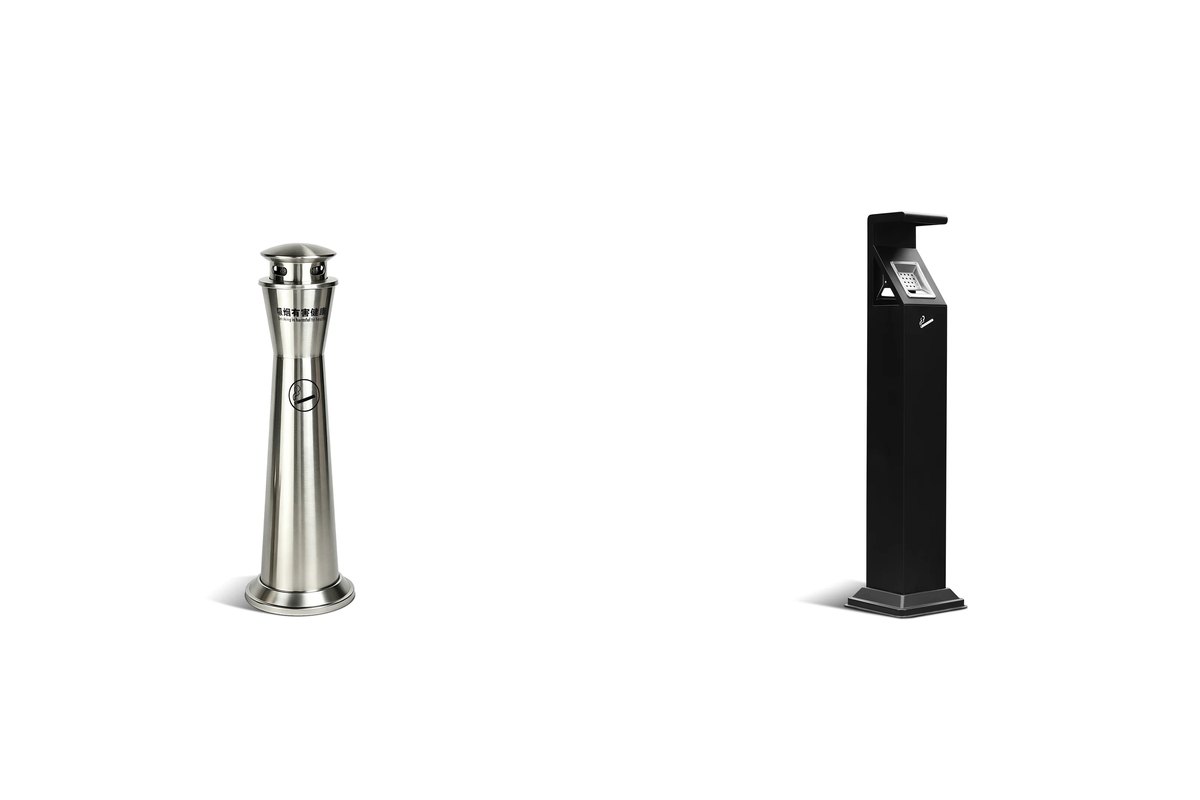
Column height and footprint are worth checking against the space before ordering. LVEN's freestanding OTMY columns all sit in a similar band - around 108-118 cm tall, with footprints from 25 cm square to 29 cm in diameter - but they differ in material, opening style and how they meet the ground:
| Model | Dimensions | Material | Suits |
|---|---|---|---|
| OTMY-02 | 29 cm (D) x 108 cm (H) | Stainless steel | Campus and plaza points where a polished finish is wanted |
| OTMY-04 | 25 x 25 x 113 cm (H) | Galvanized steel, powder-coated | Sheltered smoking points beside entrances |
| OTMY-08 | 28 x 28 x 118 cm (H) | Galvanized steel, powder-coated | Open forecourts where a taller, squared profile reads from afar |
Confirm the base layout and fixing method with whoever owns the surface before delivery. If the point is tight against a wall and floor space is scarce, that is the moment to compare a wall-mounted ashtray with a freestanding column instead. For a fuller model-by-model walkthrough, see how to choose ash columns for smoking zones.
How do you keep the placement working after day one?
A well-placed column still needs a servicing habit. Add each smoking point to the same circuit as the site's litter bins so both are emptied in one pass, and empty before the unit looks full rather than after - an overflowing column pushes butts straight back onto the ground. Occasional cleaning keeps stainless finishes presentable and stops odour build-up; the same hygiene logic that applies to keeping litter bins odour- and pest-free applies here.
Review the placement once a season. Entrances move, smoking rules tighten, and furniture layouts change; a column that was perfectly positioned in spring may sit in the wrong place by winter. Seeing how the arrangements read in real spaces - browse the project gallery for reference layouts - helps you spot a hidden or obstructing unit before your visitors do. When you are ready to fix positions, send the plan through the contact page and we will recommend columns for each point.
Frequently asked questions
- How far should an ash column be from a building entrance?
- Keep the smoking point clear of door swings, openable windows and fresh-air intakes. Many site teams work to a buffer of roughly five to ten metres as a starting point, then adjust for wind, footfall and the shape of the entrance. Local smoking rules always override general guidance, so confirm the distance your site has to respect before fixing positions.
- How many ash columns does a smoking area need?
- Plan one clearly visible column per designated smoking point rather than counting smokers per column. Add a second column when the point is large enough that smokers split into groups, or when the first unit is hidden by a corner or planting. A column you can see from the seating or shelter it serves will be used; hidden ones will not.
- Do ash columns need to be fixed to the ground?
- Freestanding columns can simply stand on a level base, but most outdoor sites bolt them down. Fixing stops the unit migrating across a plaza, tipping in gusts and being carried off. Check that the surface is firm and level, agree the fixing method with the surface owner, and choose a model whose base layout suits a surface-mounted installation.
Planning smoking points across a campus, business park or transport site? Send us the site plan for a column-by-column placement recommendation.
Get a quote