
At a glance
- Work gentlest first: detergent and water, then isopropyl alcohol on a cloth, then plastic scraping.
- Never use wire brushes, paint strippers or acetone on powder coating.
- Stainless tolerates more, but avoid chloride cleaners and bleach.
- Touch-up paint and a spare slat turn a bad tag into a ten-minute job.
Why does fast, gentle removal matter?
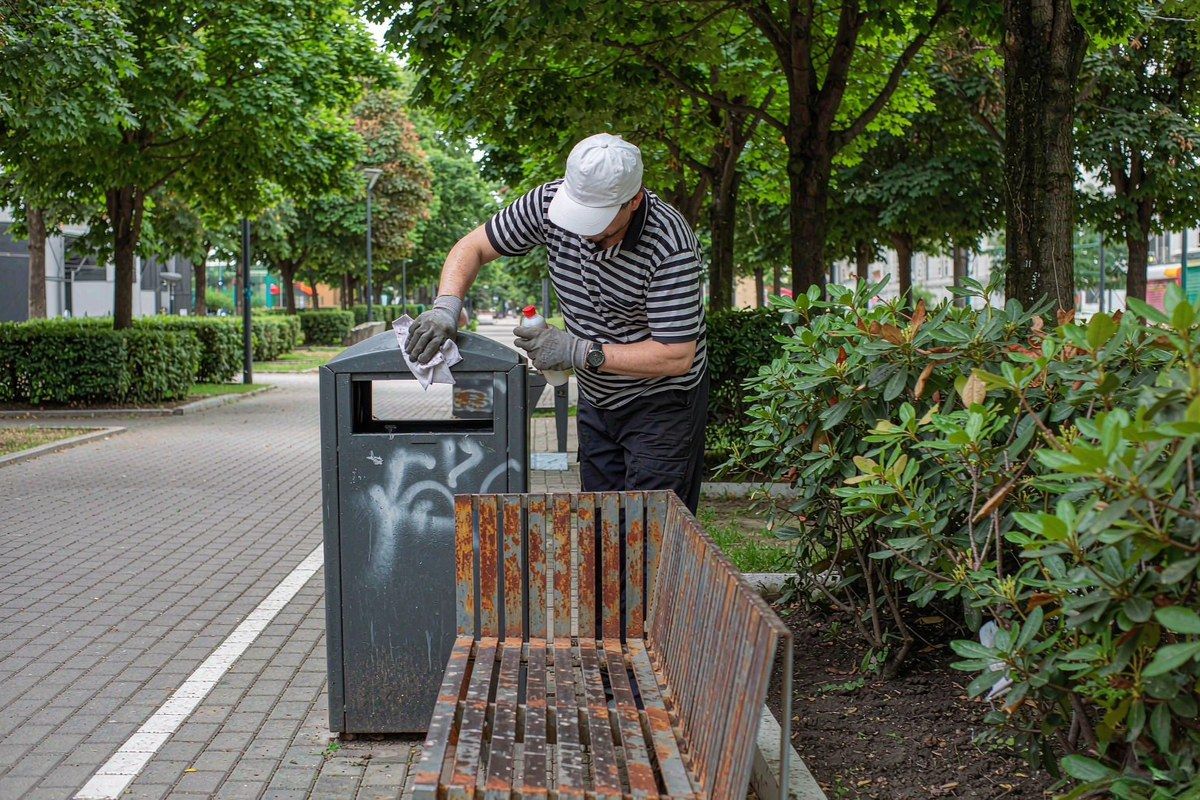
Tags left on furniture invite more of them, and every day of weathering bakes the paint or ink into the surface a little more. The counterintuitive part is that speed must not come from aggression. The surfaces that make up most public furniture, powder-coated galvanized steel, stainless steel and PS or WPC wood-look slats, all survive graffiti itself; what damages them is the removal method. Aggressive abrasion cuts through the coating, and once that happens the spot stains, corrodes and re-tags more easily than the surface around it ever would.
How do you remove spray paint from powder-coated steel?
Most LVEN outdoor bins, including models like the OTB-84, are galvanized steel finished with a powder coat. That coating is a bonded polymer layer, and fresh spray paint sits on top of it. Work in this order:
- Warm water and mild detergent with a soft cloth or sponge. Fresh tags often lift with this alone.
- Isopropyl alcohol on a cloth, wiped with the grain and wiped off, if the paint resists. Keep the contact time short and rinse afterwards.
- A plastic scraper for dried drips, held flat so it never digs into the coating.
- Automotive-grade rubbing compound as a last step, very lightly, if a ghost of the tag remains.
What stays in the cupboard: wire brushes, sandpaper coarser than finishing grade, paint stripper, acetone and brake cleaner. Each of them either cuts the coating or swells it, and a dulled patch on a dark coat is hard to disguise. If the tag area is large or the coating is already chipped, repaint rather than scrub: match the RAL shade, which is straightforward when the colour was specified as in our powder coat colour guide, and keep touch-up paint in the maintenance cupboard from day one.
What about marker pen and paint on stainless steel?
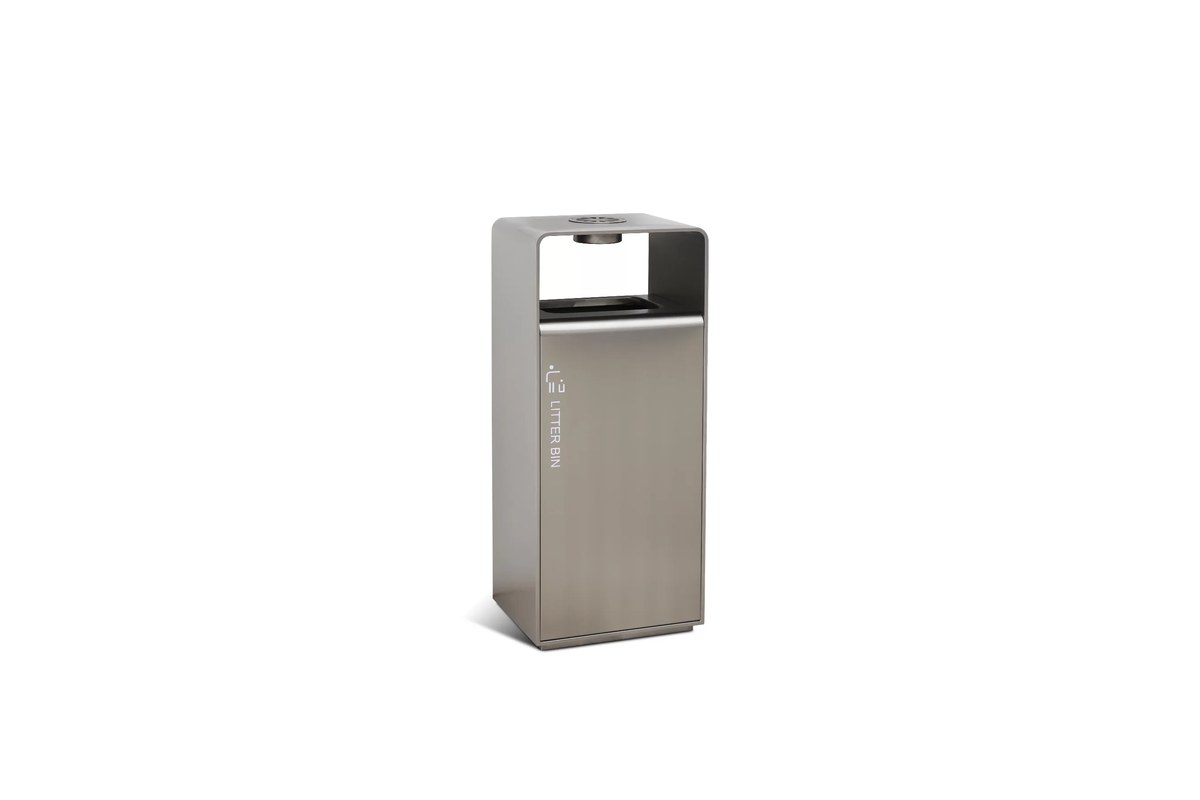
Stainless bins and bench frames, such as the OTX-02C and the OTY-68, tolerate stronger chemistry than coated steel, but they have their own weakness: chlorides. Bleach and chloride-based cleaners pit the surface, so they stay off the list. For marker ink, isopropyl alcohol works; for paint, a lightwipe of paint thinner on and immediately off is acceptable on stainless, though it should still be a last resort. Always finish with water and a soft dry cloth so the surface dries clean, following the routine in our stainless bin cleaning guide.
Grade matters here too. If the site is near the coast or the furniture is cleaned daily, the difference between 201 and 304 grade decides how the surface ages under this treatment, as explained in 201 vs 304 stainless steel.
Can you clean graffiti off wood-look slats?
Yes, with more restraint than on metal. PS and WPC slats, used on benches like the OTM-02C and the OTZY-19B table set, are polymer boards, so spray paint does not soak in as it does into raw timber. Start with detergent and water and a soft brush along the board. Isopropyl alcohol on a cloth handles most marker ink; test any solvent in a hidden edge first, because solvents can cloud some board surfaces. If a tag covers a whole slat, remember that slats are individual replaceable parts: swap the slat instead of fighting the paint, using the method in how to replace a park bench slat. That is also the argument for ordering spare slats with the furniture, as set out in our spare parts guide.
How do you make furniture easier to clean next time?
Specification decides how much of this fight you ever have. Choose smooth coatings over textured ones on the surfaces most likely to be tagged, since texture holds ink. Darker frame colours show a spray-paint ghost far less than pale ones, which matters when full repaints are not practical; the trade-offs are in our colour guide, and coating choice itself in powder coating vs fluorocarbon coating. Covered openings such as the hooded top on the OTB-84 remove the largest flat panel from view, and fewer flat panels mean fewer canvases. Finally, log every incident and every cleaning product that worked, so the crew's second tag removal is faster than its first, and keep the surface inspections part of the routine in our rust prevention guide.
What belongs in the graffiti response kit?
- Soft cloths, sponges and a plastic scraper, so nobody improvises with wire.
- Mild detergent, isopropyl alcohol, and finish-grade rubbing compound.
- Touch-up paint matched to every frame colour on site, and two spare slats per bench family.
- A one-page method card per surface type, so the response is the same whoever is on shift.
If tags are a recurring problem in your park, campus or transit site, tell us the surfaces and colours you have in the field and we will advise on cleaning methods, touch-up stock and more cleanable alternatives, or quote replacement parts where a swap beats a scrub.
Frequently asked questions
- What removes spray paint from powder-coated metal?
- Start with the gentlest thing that works: warm water and a mild detergent with a soft cloth, then isopropyl alcohol on a cloth if the paint resists. Use a plastic scraper for dried drips. Never use wire brushes, paint strippers or strong thinners on a powder coat, because they dull or dissolve the finish and leave a patch that collects dirt.
- Can you use paint thinner on outdoor furniture?
- Only on stainless steel, and only as a last resort wiped on and off quickly. On powder-coated steel, paint thinner and acetone attack the coating and can pull colour out of it. On PS or WPC wood-look slats, solvents can cloud the surface, so test any cleaner in a hidden area first and keep the contact time short.
- Does graffiti removal damage powder coating?
- Not if the coating is intact and the method is gentle. A complete powder coat is a hard, bonded layer, and mild detergent or isopropyl alcohol on a cloth will lift most spray paint without touching it. Damage happens when abrasives, wire brushes or strong solvents are used, or when the coating was already chipped, which is why touch-up paint belongs in the maintenance kit.
Dealing with repeat tagging on public bins or benches? We will match cleaning methods and touch-up stock to the furniture already on site.
Get a quote