
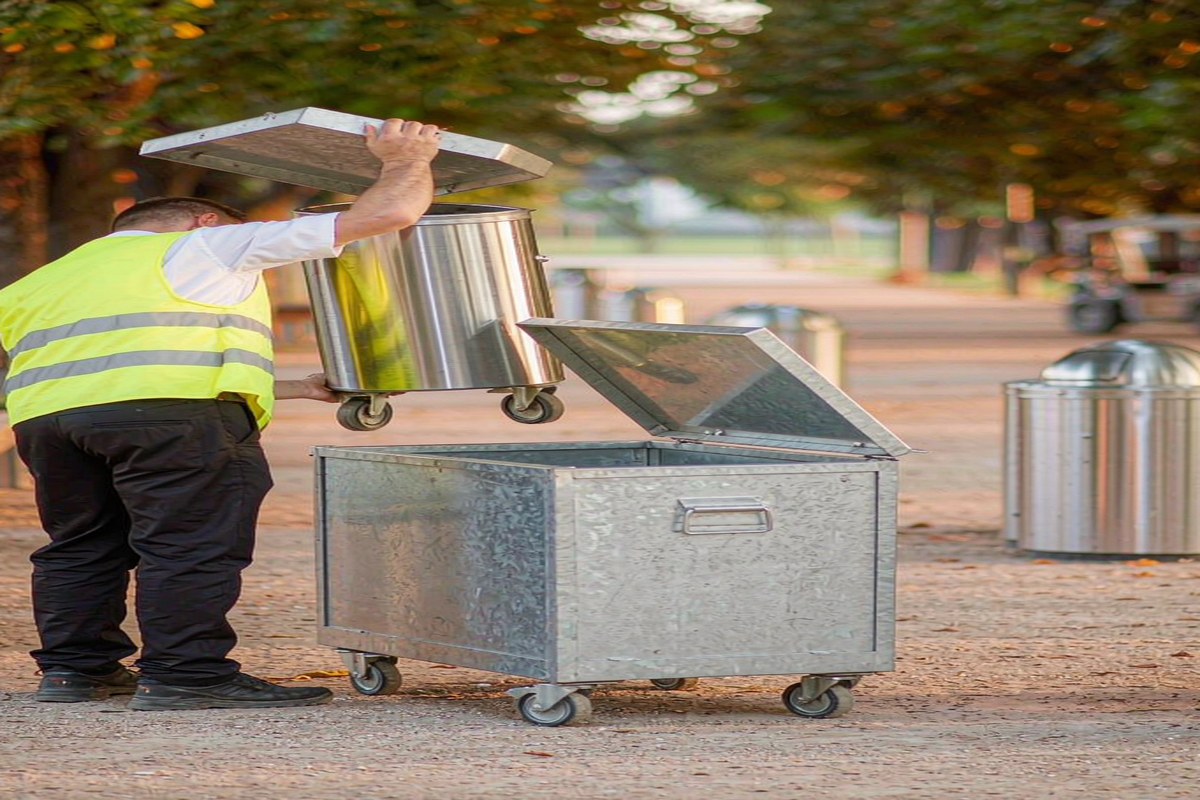
At a glance
- Plan the collection route first, then place the bin points — not the other way round.
- Every stop has three costs: walking distance for the crew, carrying effort, and vehicle access time.
- Bin design decides stop time: wide access doors, removable liners and the right opening make each visit shorter.
- A route is a living plan: walk it, time it, and adjust frequencies and bin sizes from what the crews actually find.
Why plan the collection route before choosing the bins?
Because the route, not the catalogue, decides what bin you can afford to run. A bin that is cheap to buy but expensive to empty is the wrong purchase: if crews park far from the stop or wrestle a liner out of a narrow shell, those minutes repeat on every visit for the life of the bin.
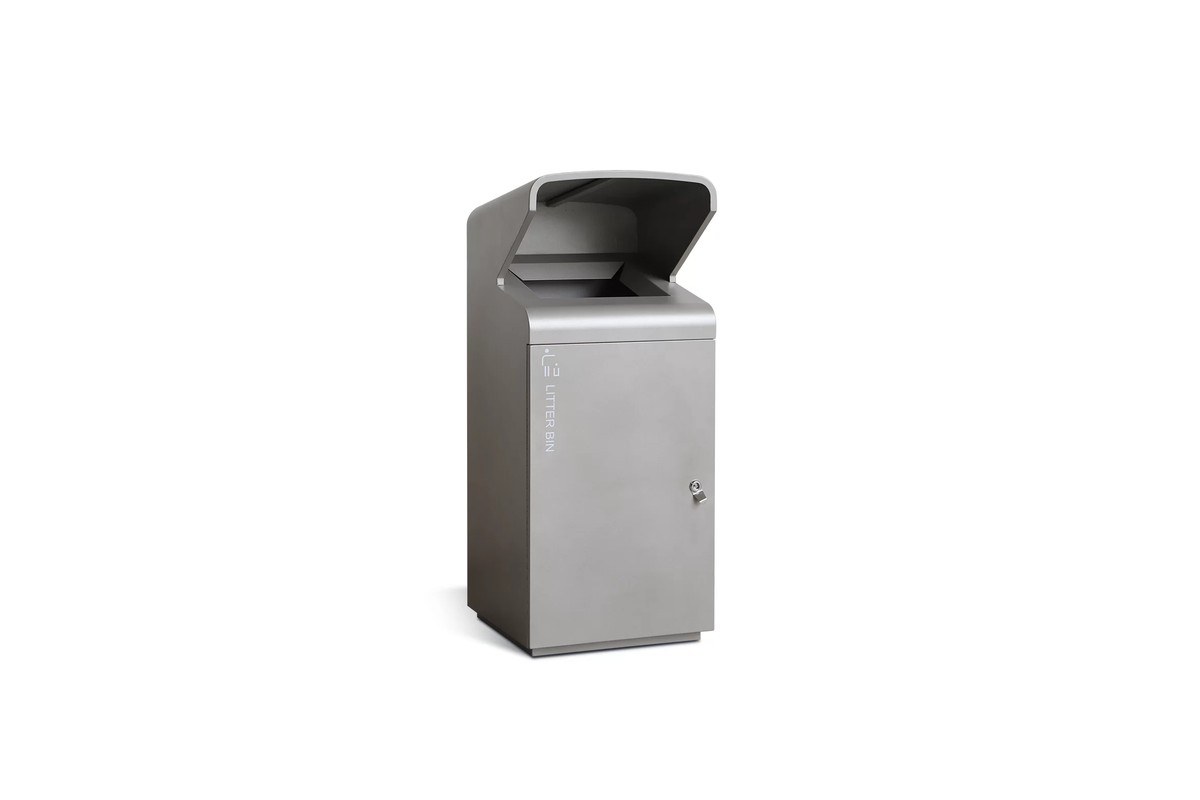
Thinking route-first changes the specification: stops far from vehicle access push you toward higher-capacity bins so the crew visits less often; stops with two streams push you toward a two-compartment model so one visit handles both, the same logic as our sorting station layout guide; stops in anti-vandalism zones push you toward anchored shells with lockable hoods.
It also settles the density question honestly: how many bins a site needs is a service question, not only a design one. Our bin count guide covers visitor-side spacing; this article covers the other half.
What makes a bin point fast and safe to service?
Walk any route with a crew and the same friction points appear. Each one has a hardware answer:
- Access to the liner. A side door or a hood that opens fully and stays open beats a narrow top aperture: crews should never lift the whole shell or reach blind into a deep tube.
- A removable liner. Swapping a full liner takes seconds; extracting a burst bag from the bottom of a shell takes minutes and leaves residue. Liners must match the shell, as set out in our liner matching guide, so the swap is one clean motion.
- Carrying design. Two handles at a balanced height, a liner that stays within a sensible loaded weight, and a clear, level path from bin to cart.
- Working space. The stop needs room for the crew to stand, swing the hood open and set a liner down — a bin wedged between planters or against a railing slows every visit.
- Visibility. A stop the crew can see from the path is checked faster, and full bins get noticed before they overflow.
The opening visitors use matters too: an aperture suited to the waste stream keeps litter off the rim and the ground, which reduces the unscheduled sweeping routes absorb; the principles are in our opening size guide.
Which route patterns work for parks and streetscapes?
Two patterns cover most public sites. A loop route suits parks and campuses: one circuit passing every stop without backtracking, entering and leaving at the same service point. An out-and-back route suits linear sites — riverside paths, promenades, shopping streets — where stops line up along one corridor.
Whichever pattern you choose, three rules keep it honest:
- Fix the vehicle access points first: mark where the vehicle or cart can actually stop and load, then tie stops to those points. A stop the vehicle cannot reach within a short carry becomes a skipped stop.
- Keep the sequence stable: bins should stay where the route plan expects them. This is the operational reason for anchored installations — a fixed shell never migrates, while unanchored bins drift and the route stops matching reality.
- Plan for peaks, not just averages. Weekends, events and seasons change the waste volume dramatically. The route should name which stops get extra visits on peak days, rather than leaving crews to improvise.
Transfer and depot points matter too: where full liners are consolidated and where the vehicle parks decides how much of the route is productive work rather than walking with a heavy liner.
How do bin design choices change collection time?
Every operational requirement above maps to a hardware decision. The table summarises the ones that matter on a working route:
| Route requirement | What to specify | What it saves |
|---|---|---|
| Fast liner swaps | Side access door, removable matched liner | Minutes per stop, cleaner shells |
| Fewer visits to distant stops | Higher-capacity or dual-compartment models | Whole visits removed from the schedule |
| Vandal-prone locations | Anchored shell, lockable hood, crew keys | Replacements and repositioning work |
| Two streams at one stop | Multi-compartment recycling shells | One stop instead of two |
| Long service life | Hot-dip galvanised or stainless construction | Fewer replacements on the route |
That last row is easy to underestimate: a route is planned around its bins, so bins that fail early force a re-plan. Durability by material is covered in our bin service life guide, and the hardware options — hooded, multi-stream and anchored models — are in our litter bin range.
How do you review and improve a route over time?
Treat the first version of any route as provisional. Walk it with the crew for a few weeks and record per stop: how full the bin is on arrival, how long the stop takes, and anything that slows it down — a missing key, a liner that jams, a path that turns to mud in rain. That list is the improvement plan.
The common adjustments are simple. Bins that run full move up the frequency list or swap to a larger model; bins that never fill get merged into a neighbouring stop or re-sited to where visitors pause, such as seating clusters and entrances. Seasonal peaks should trigger a light annual review rather than a redesign.
Finally, feed what crews learn back into the next purchase: they know which liners tear, which hoods pinch, which shells corrode first. Buying with those notes in hand is the cheapest route improvement available. If you are planning or re-planning a site, send us the route sketch — we help match bin models, capacities and fixings to the servicing plan. More examples are in our projects and the case studies index.
Frequently asked questions
- How often should public litter bins be emptied?
- Often enough that no bin overflows between visits, which depends on footfall, bin size and season rather than a fixed calendar. Set a provisional frequency, inspect the route for a few weeks, and adjust: bins that consistently run full move up the schedule or get a larger model; bins never more than half full can be emptied less often or merged into a neighbouring stop.
- What makes a litter bin easy to empty for collection crews?
- Access and carrying design. A hood or door that opens wide and stays open, a removable inner liner instead of loose bags at the bottom of the shell, handles positioned for a two-hand lift, and an opening sized to the waste actually left there. Side access beats reaching into a narrow top opening, and liners that match the bin mean crews swap a full liner without repacking bags.
- Should outdoor litter bins be fixed in place or movable?
- Most public sites fix the outer shell and keep the inner liner as the portable part. A fixed shell resists theft and wind, stays where the route plan expects it, and protects its anchors; the removable liner gives crews the portability. Fully mobile bins suit temporary events, but in permanent public space they drift unless anchored anyway.
Re-planning bin points on a route? Send us the site sketch and we'll match bins to the servicing plan.
Get a quote