
At a glance
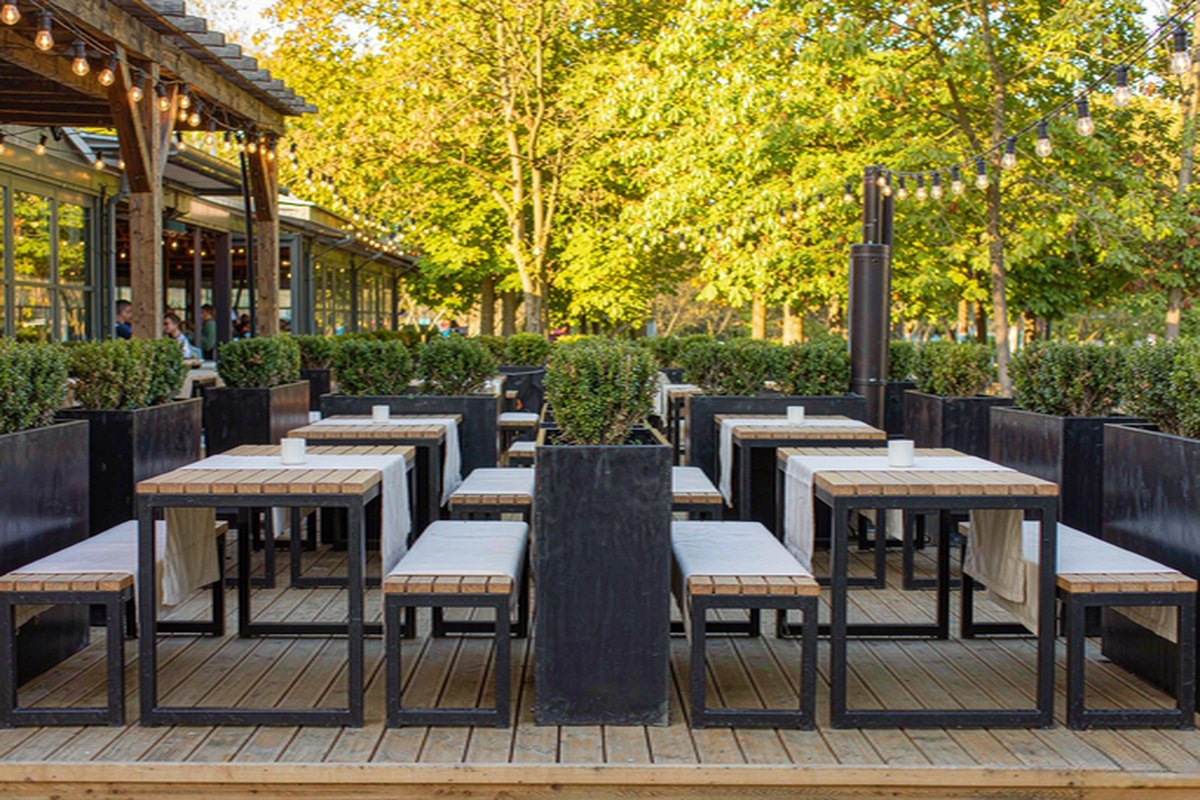
- A terrace works a table harder than any indoor room: rain, UV, spilled drinks and cleaning chemicals all test the frame and the slats.
- Galvanized or aluminium frames with PS plastic wood or WPC slats are a practical hospitality combination - timber look, no sealing, easy wipe-downs.
- Order by footprint, not table length alone: attached benches widen a set to 142-180 cm, so measure the terrace before choosing a model.
- Freestanding sets flex with covers and seasons; anchor or ballast them only where wind and the surface make it necessary.
What makes a restaurant terrace different from a park?
A public park bench is judged over years; a restaurant terrace table is judged every evening. Covers turn over several times a day, drinks spill, plates drag across the slats, and staff wipe everything down with cleaning products at close of service. The furniture also gets moved constantly - pushed together for a large party, separated for a couple, stacked or stored when the weather turns.
That daily routine, more than the climate alone, decides which tables last on a dining terrace. The outdoor tables and chairs range is built around that reality: welded steel or aluminium frames, slat materials that tolerate moisture without maintenance, and footprints sized for commercial layouts rather than one-off garden use.
Which materials survive weather, spills and cleaning?
Start with the frame. Galvanized steel resists corrosion under powder coating and keeps its stiffness season after season; aluminium alloy goes one step further for sites near the coast or where weight matters when staff move sets nightly. Both shrug off the wet-dry cycles that quickly ruin untreated furniture.
The slats matter just as much on a dining surface. PS plastic wood and WPC keep the warm look of timber but do not splinter, rot or need re-sealing, and food spills wipe off without staining. The comparison between slat materials runs along the same lines as choosing between wood, composite and aluminium bench slats: on a terrace, moisture resistance and cleanability outrank everything else.
What size table fits your terrace?
Measure the terrace before you fall in love with a model, because attached benches widen the footprint well beyond the tabletop. A rectangular table around 150 cm long with seating on both sides typically seats six adults; 180 cm versions give six diners more elbow room or stretch to eight on busy nights. LVEN's OTZY picnic-style sets cover both bands:
| Model | Footprint (L x W x H) | Frame + slats | Note |
|---|---|---|---|
| OTZY-09 | 150 x 163 x 78 cm | Carbon steel + galvanized steel | Compact 150 cm set for tighter terraces |
| OTZY-19B | 150 or 180 x 165 x 76 cm | Galvanized steel + PS plastic wood | Two lengths, one family look |
| OTZY-18A | 180 x 170 x 75 cm | Aluminium alloy + PS plastic wood | Light frame for terraces where sets move daily |
| OTZY-20 | 180 x 142 x 76 cm | Galvanized steel + WPC | Narrower footprint along walkways |
| OTZY-18C | 180 x 180 x 76 cm | Galvanized steel + PS plastic wood | Square set with space all round |
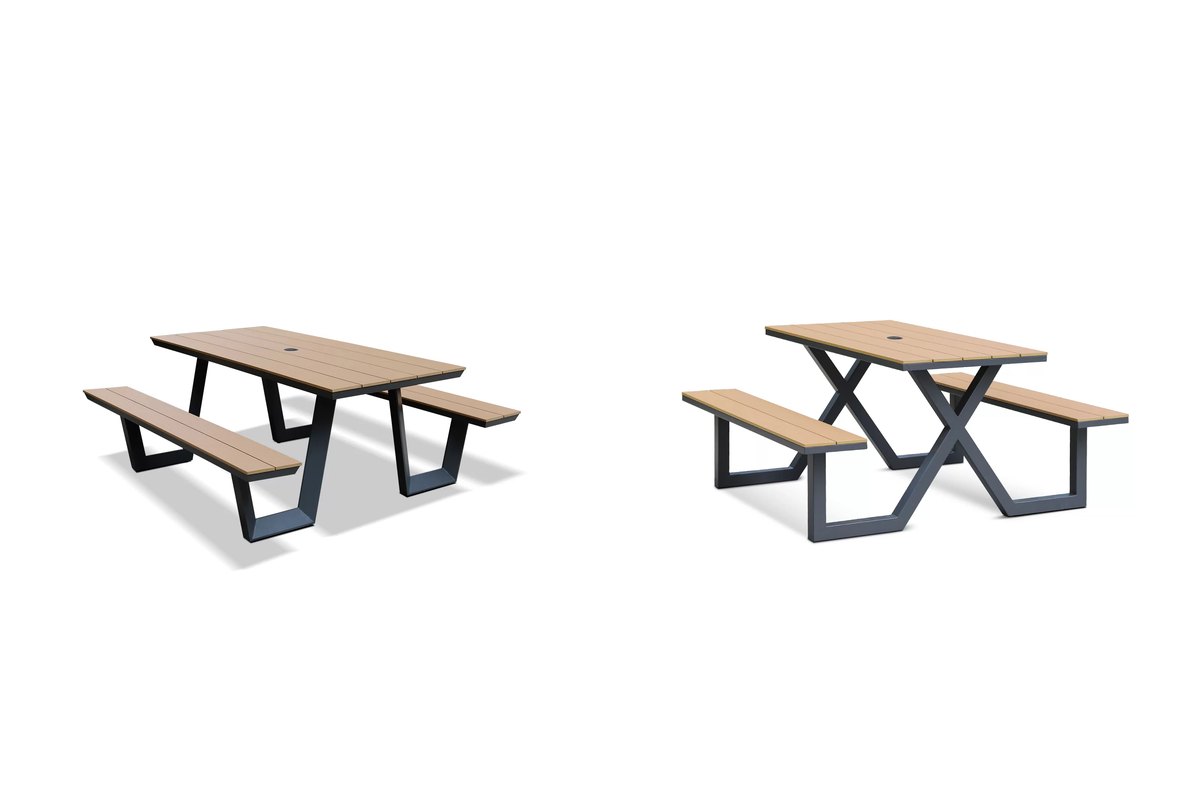
If your terrace mixes seated zones with standing areas, the same family logic that shapes picnic area layouts applies here: keep one model family, vary the length.
How much space do you need between tables?
The set footprint is only half the number. Diners need room to pull back from the table, staff need a route to carry plates, and the terrace as a whole needs clear circulation for wheelchair users. As a planning habit, keep a clear walkway past every seated table and resist the temptation to add one more set into a gap that only looks big enough on the plan. Compare how the sets land on the ground in the project gallery before committing to a count.
Spacing also changes how the terrace feels. Sets crammed edge to edge read as a canteen; the same number of sets with breathing room reads as a destination. On a dining terrace the extra square metre per table usually pays for itself in longer stays.
Should terrace tables be fixed or freestanding?
Most restaurant terraces want freestanding sets, because the layout changes with the season, the covers and the weather. Freestanding frames also let staff clean under and around them. Fixing earns its place in three cases: exposed rooftops and coastal sites where gusts genuinely move furniture, sloping surfaces where sets creep, and operators whose insurers ask for it. Where you do fix, bolt through the frame into the slab and keep the fixings discreet.
The fixing-versus-flexibility trade-off, and how attached benches change it, is covered in detail in attached vs detached picnic table benches; the structural side - what a frame must cope with over years - sits behind picnic table load capacity and structure. Both apply directly to dining terraces.
What completes the terrace around the tables?
Tables are the anchor, but guests experience the whole terrace. A planter line does the work of separating the dining zone from passing foot traffic without building a wall; a covered litter bin at the terrace edge saves staff a hundred small trips; and if smokers are part of the trade, a designated point with an ash column keeps the terrace itself clean. The zone-by-zone method in outdoor furniture for hotels and resorts maps neatly onto restaurant terraces too.
When you have the terrace dimensions and the covers target, send both through the contact page and we will propose a table count with the matching planters and bins.
Frequently asked questions
- What size outdoor table seats six people?
- A rectangular table around 150 cm long with benches or chairs on both sides typically seats six adults. In LVEN's range that footprint starts with the OTZY-09 at 150 x 163 cm and the OTZY-19B in its 150 cm version. If your covers per table are higher, step up to the 180 cm versions of the OTZY-19B, OTZY-18A or OTZY-18C instead.
- Which materials work well for restaurant terrace tables?
- Frames in galvanized steel or aluminium alloy take wet weather, and slats in PS plastic wood or WPC hold a timber look without sealing or staining. Both are easy for staff to wipe down with ordinary cleaners at the end of service, which matters more on a dining terrace than on a park bench. Powder-coated finishes also keep colour through years of sun.
- Do outdoor restaurant tables need to be anchored?
- Most terrace tables work best freestanding, because staff rearrange them for covers, cleaning and seasonal layouts. Fixing becomes worthwhile where gusts are strong or the surface slopes: bolt the frame down or add discreet ballast so sets cannot tip or migrate. Whatever you choose, keep emergency routes and the terrace edge clear so the layout stays compliant.
Fitting out a restaurant terrace? Send us the dimensions and covers target, and we will propose a table count with matching planters and bins.
Get a quote