
At a glance
- Most bin fires start with something that was still hot: a cigarette end, barbecue ash, a firework.
- Design narrows the path - all-metal body, hooded opening, lockable door - but no bin is fireproof.
- Siting and emptying matter as much: a bin clear of facades and planting, emptied early, spreads less.
- Ash columns keep cigarettes out of the waste stream on smoking-heavy sites.
Why do public litter bins catch fire?
A bin fire needs fuel, air and ignition. The fuel is already there: paper, packaging, cups, plastic film; air arrives through the opening. That leaves ignition, and on a public site it is usually a smouldering cigarette end, hot ash from a disposable barbecue, a firework, a discarded lighter or deliberate ignition at night.
The first two are underestimated. A cigarette end stays hot long after it leaves a hand, and it lands on dry paper at the top of the liner, where air is most available. Barbecue ash looks cold within minutes but stays hot inside a pile, which is why bins near picnic areas fail more often than bins on a footpath.
How does bin design reduce the risk?
Design cannot remove every hot object from the waste stream, but it can remove the easy path.
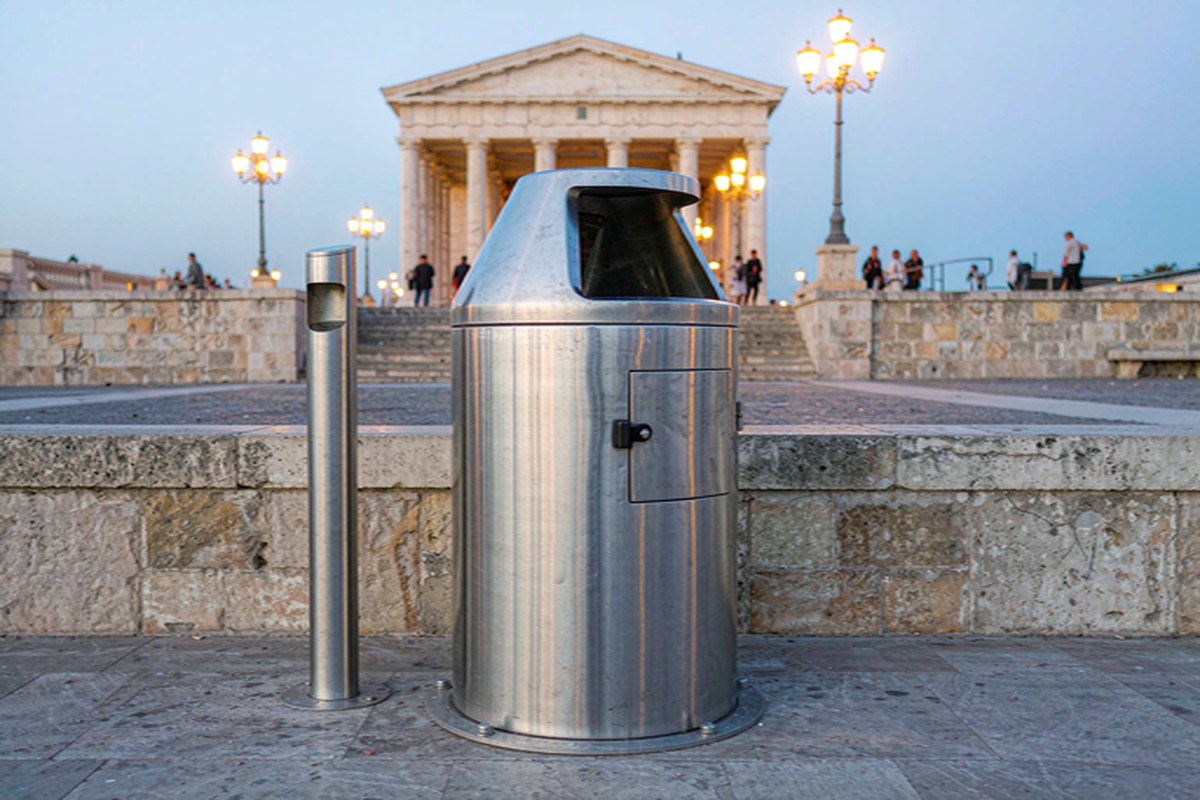
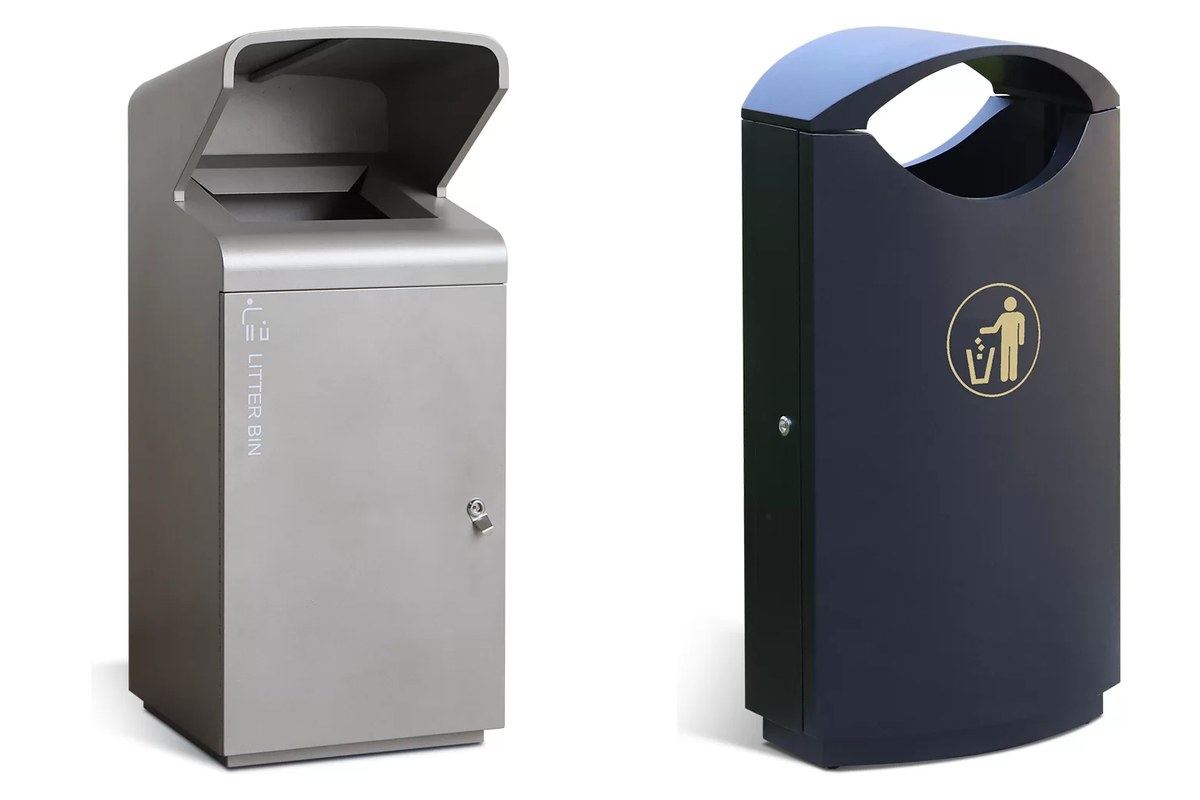
Start with the body. Powder-coated galvanized steel or stainless steel leaves very little combustible material of its own; a plastic body adds fuel and melts into burning drips. The LVEN outdoor litter bin range is built this way - the OTB-84 is a 45 x 45 x 107.6 cm steel body with 90 L capacity, and the OTB-14 a 60 L unit at 50 x 33 x 98 cm.
Then the opening. A hooded or covered top keeps rain out, and dry waste burns far more readily than damp waste; it also limits what can be posted in, since a shaped opening will not take a full ash tray or a bundle of cardboard. A lockable service door keeps the liner out of reach and stops a bin being packed deliberately.
Inside, a removable metal inner liner holds its shape when a fire starts and can be replaced afterwards. Where a bag is used, keep it fitted to the rim and do not overfill: loose film at the opening is the first thing to catch, which is where matching bin liners to outdoor litter bins starts.
Where should bins stand to limit fire spread?
A bin fire rarely stays inside: paint burns off, the liner distorts and burning material drops out of the opening. Placement is part of fire safety.
- Keep bins out of contact with timber cladding, fencing, hedges and mulch beds.
- Stand them on paving or concrete rather than grass, bark or decking.
- Avoid the space directly under a combustible canopy or a low tree.
- Leave a gap to parked vehicles and stalls, and never block hydrants or escape routes.
The logic that governs where to place ash columns in a smoking area applies to the bin beside them: put the collection point where people already stop.
How often should bins be emptied?
A full bin is a bigger fire load, and waste stacked above the rim puts dry paper where a cigarette lands. Emptying before that is the cheapest precaution there is.
Treat two-thirds full as the trigger rather than "when the crew passes". Busy interchanges and food streets often need a daily round plus an evening visit, while a residential path may need two or three collections a week. A weekend market can fill a bin in an hour, so temporary bins need a named owner and a mid-event check. Route planning covers the walk, and the same walk can carry a look for smoke, scorching or a lid left open.
What about cigarettes and ash?
If a site has smokers, give them somewhere to put the cigarette that is not the bin. A freestanding ash column beside the seating or the entrance does that job: the OTMY-02 is 29 cm in diameter and 108 cm high in stainless steel, while OTMY-04 at 25 x 25 x 113 cm and OTMY-08 at 28 x 28 x 118 cm are galvanized steel.
Bins with an optional top ashtray insert - the OTM-02C and OTX-02C, or the OTB-01 - help only if the tray is emptied on the same round. A full ashtray above dry waste puts the ignition source directly over the fuel.
Which models suit a fire-aware specification?
| Model | Capacity and size | Opening and access |
|---|---|---|
| OTB-84 | 90 L, 45 x 45 x 107.6 cm | Hooded top opening, lockable front service door, removable metal liner |
| OTB-14 | 60 L, 50 x 33 x 98 cm | Curved hooded top, lockable service door, metal liner |
| OTB-422 | 80 L per unit, 48 x 35 x 95 cm | Covered top opening, lockable service door, pairs for sorting |
| OTB-45W | 30 L + 30 L + 50 L | Triple compartments, individual lockable doors and liners |
| OTB-30 | 40 L x 2 or 40 L x 3 | Lockable doors, separate removable liners |
After an incident, change the specification rather than only the damaged unit: hooded opening, metal liner, locking door.
What should the team do after a bin fire?
Call the fire service first, and do not open the service door while there is smoke or heat inside - the door is the air inlet, and opening it can restart the fire. Keep people back.
Afterwards, replace the liner rather than cleaning it, check the anchor bolts because heat softens fixings, inspect the coating for blistering that will rust within a season, and record the location. Two fires at one point in a year mean the site is wrong: too close to a smoking point, too close to a facade, or emptied too rarely.
For the servicing side around the same assets, stopping litter bin odour and pests covers the routine, and the project gallery shows how bins sit in real streetscapes.
Frequently asked questions
- What causes litter bin fires?
- The usual ignition sources are a cigarette end that is still smouldering, hot ash from a disposable barbecue, fireworks and discarded lighters, and deliberate ignition. The fuel is ordinary waste, and an overfull bin gives a hot cigarette far more dry paper to land on, which is why emptying frequency changes the risk as much as the bin itself.
- Are metal litter bins fireproof?
- No. A steel body does not add fuel the way a plastic body does and keeps its shape while the contents burn, but the waste inside still burns and the paint and liner will be damaged. Hooded openings and lockable doors reduce the chances of a fire starting or spreading; they do not make a bin fireproof, and local fire requirements should be checked with the authority responsible for the site.
- How often should public bins be emptied to reduce fire risk?
- Treat two-thirds full as the trigger instead of a fixed schedule. Busy transport stops and food streets often need a daily round plus an evening visit, quieter paths two or three collections a week, and event sites a mid-event check with a named owner. The servicing walk should also look for smoke, scorching, a lid left open or waste above the rim.
Specifying bins for a site with a fire history? Send the layout and waste streams, and we will propose hooded models with metal liners and lockable doors.
Get a quote